Key Points
- Ohio's EXCEL Academy is free for every nursing home in Ohio.
- Free CNA training for older adults includes employer sponsorship and WIOA grants.
- Employer-sponsored CNA training often requires a 6 to 12 month work commitment.

A practical guide to Ohio's EXCEL Academy and other free CNA training pathways for older adults seeking healthcare careers.

Ohio's EXCEL Academy gives nursing home staff, including CNAs and STNAs, free continuing education and mentoring through two distinct tracks: a cohort-based university model and a monthly leadership community. Launched in August 2024 by the Ohio Department of Aging, the program is available at no cost to every nursing home in the state.
For older adults considering a certified nursing assistant career, Ohio offers additional CNA training resources and pathways to free initial certification through employer sponsorships, workforce grants, and local aging agency programs. The catch is knowing which options carry work commitments, which cover all costs, and which fit your situation.
Launched in August 2024, Ohio's EXCEL Academy is a free continuing education and mentoring program from the Ohio Department of Aging.1 The department reports that the academy is available at no cost to every nursing home in Ohio. It grew out of the Regional Rapid Response Assistance Program and a recommendation from Ohio's Nursing Home Quality & Accountability Task Force.
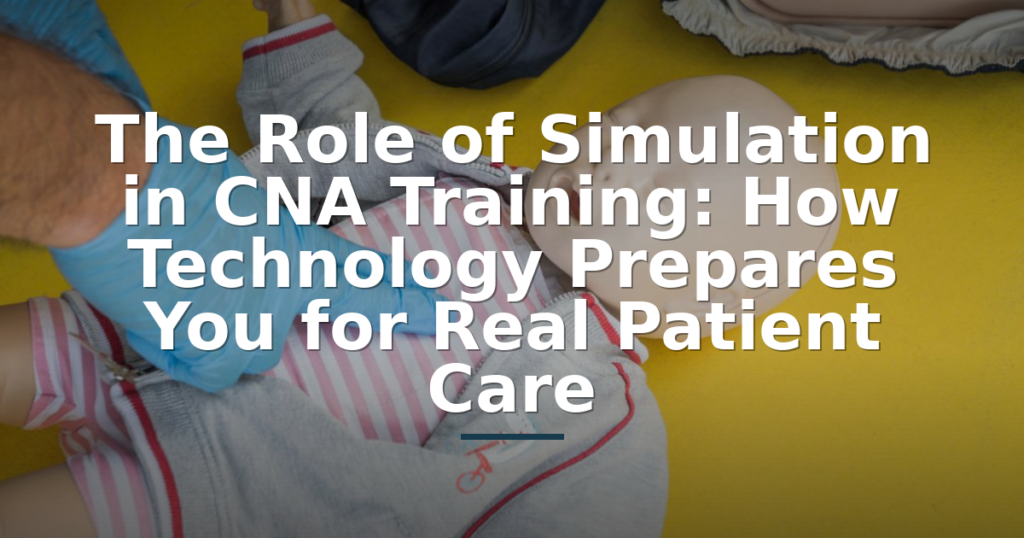
EXCEL Academy is built for nursing home staff who are already on the job. It combines structured learning with mentoring, CNA simulation scenarios, case study demonstrations, and a Connect community of practice. The focus is on improving care quality, teamwork, and facility leadership.
EXCEL Academy is not a substitute for initial CNA or STNA training; new students should pursue CNA training in Ohio for certification. It is a continuing education and mentorship resource for current nursing home employees. For CNAs and STNAs, that can mean building clinical, communication, and problem-solving skills without leaving their facility.
Did you know? Ohio's EXCEL Academy is completely free for every nursing home in Ohio. Launched in August 2024 by the Ohio Department of Aging, it gives facilities no-cost training and mentoring for staff including CNAs and STNAs.
Ohio's EXCEL Academy offers two distinct ways for nursing home staff to connect and learn. EXCEL University builds skills through a structured cohort model, while EXCEL Community supports leadership with a monthly virtual forum.

Some free CNA training programs let a student sign up directly. Ohio's EXCEL Academy takes the opposite approach: a nursing home applies on behalf of a facility team, and individual staff members are selected from inside that team.
EXCEL Academy is open to every nursing home in Ohio.1 The program is facility-level, not individual-level. A home must submit the application and assign a point of contact. Accepted facilities then select participants from a broad care team. Common roles include administrators, medical directors, registered nurses, licensed practical nurses, certified nursing assistants, state tested nurse aides, and other employees involved in the caretaking process.2 Earlier materials described a facility team of 4 to 10 staff members, but current application resources do not list a fixed minimum or maximum team size.2
Nursing homes apply through the Care Center portal or the EXCEL tile.2 There is no application fee.1 The Ohio Department of Aging selects new EXCEL University cohorts roughly once per quarter, though quarter-by-quarter deadlines for 2026 are not publicly posted.2 Facilities with questions are directed to contact the Ohio Department of Aging directly.
The monthly EXCEL Community virtual sessions are designed for facility administrators, directors of nursing, and medical directors. Those sessions meet every third Thursday at 2 p.m.3 The University track, by contrast, is the cohort model that pulls in CNAs, STNAs, RNs, LPNs, and other staff who may later pursue CNA to RN programs.
A CNA or STNA cannot apply to EXCEL Academy alone. If you work in a nursing home, ask your administrator or director of nursing whether the facility has applied or plans to apply. Because the program is free and open statewide, it may simply be a matter of your facility forming a team and submitting an application.
Free CNA training for older adults in Ohio usually comes through four paths: employer-sponsored STNA classes, WIOA workforce grants, local Area Agency on Aging projects, and age-limited federal programs. These options cover initial nurse aide certification, which is different from EXCEL Academy. EXCEL Academy provides free continuing education and mentoring for nursing home staff who already hold a role; it does not pay for first-time CNA certification.
Several Ohio operators train new nurse aides at no charge after hiring, with no upper age limit. - CommuniCare Health Academy: statewide; free for hired trainees. - Foundations Health Solutions: statewide/Akron; free for selected employees. - Genacross Lutheran Services: CNA classes in Toledo, Ohio; free. - HCF Management: Western Ohio; free with hire. - Majestic Care: Central Ohio; free. - McGregor PACE Academy: CNA classes in Cleveland OH; free for Cleveland residents.
Application steps generally start with a job application, interview, or pre-employment screening at the facility. Because books, exam fees, and work commitments vary, ask the employer exactly what is covered before enrolling.
Through local OhioMeansJobs centers, WIOA funding can fully cover STNA tuition and exam fees for eligible adults. Eligibility includes low-income workers, dislocated workers, and veterans; there is no upper age limit. Income thresholds vary by county and year, and the training provider must appear on Ohio's Eligible Training Provider List. Apply by contacting your county OhioMeansJobs center, completing an eligibility interview, and choosing an approved STNA program.
The #OHIOSTRONG Personal Care Aide Training Program, offered through Area Agency on Aging PSA 2 in Dayton, historically covered CNA course costs for people impacted by COVID-19. The STNA exam was not included, and training took place through a local provider. Funding beyond 2023 is not confirmed, so contact the Area Agency directly. Goodwill Columbus lists free job training open to all adults in Franklin County, which may include healthcare-related paths; confirm current course offerings. Job Corps offers free CNA classes in Cincinnati, Cleveland, and Dayton, but is limited to ages 16 to 24, so it will not fit most older adult readers.
No listed pathway currently describes age-specific stipends or career coaching; most eligibility depends on income, employment status, or pandemic impact, not age.
Does "free" CNA training still come with a contract and costs you need to budget for? The tuition discount may not be the only catch.
Many Ohio employers that offer free CNA training with job placement tie the tuition benefit to a written work commitment after you become certified. The typical range is six months to one year, and some facilities, such as Judson, ask for a one-year commitment. If you leave early under a reimbursement model, you may be required to repay part of the tuition on a pro-rated basis. In fully funded programs, the penalty is often not published, so ask directly before you enroll.
A no-tuition program usually removes the biggest expense, but not every fee. Common student-paid costs include:
Menorah Park, for example, lists free training but requires students to supply their own uniforms. Atech and Clark State bundle some items such as the exam, background check, or uniform reimbursement, but no source indicates every program covers all of these. Full paid STNA programs often run $500 to $1,000 before add-ons, a figure driven largely by cna program tuition costs; a free program mainly removes tuition, not the extras.
Before signing, ask for a written statement that spells out the commitment length, whether the job is full-time or part-time, what happens if you leave early, and which fees the facility will cover. Older adults often have more flexibility to shop for an offer with clear terms rather than accepting a vague "free tuition" promise.
For older adults outside Ohio, the core tradeoff is not whether to become a CNA. It is whether paying for nursing school is tied to age, income, employer, or region, and whether that funding covers the full cost of training. State and federal models vary enough that two people of the same age can face very different pathways depending on where they live.
The Senior Community Service Employment Program (SCSEP) is the only federally funded employment and training program for unemployed, low-income adults age 55 and older. It provides paid part-time community service plus training to help participants move into unsubsidized jobs. In 2024, the U.S. Department of Labor awarded about $203 million in SCSEP grants1, plus $18.4 million in sector-based training grants for older workers2, some of which focus on healthcare and long-term care.
CNA availability within SCSEP is not uniform. Connecticut's published SCSEP state plan lists nurse aide training among its common occupational trainings, alongside CPR and first aid.3 California's SCSEP plan does not explicitly document CNA training.4 For older applicants, the practical step is to ask a local SCSEP grantee whether nurse aide training is currently offered in their area.
California has a LeadingAge California program that covers full tuition for CNA and home health aide training through $35 million in state funding.5 It is open to individuals seeking CNA or home health aide training, without an age restriction, so older adults can participate even though the program is not senior-exclusive.
New York's Direct Caregiver Flexibility Program directs up to $19 million annually over five years to training centers and a support hub for personal care aides, home health aides, and CNAs.6 The funding targets organizations rather than individuals, so most older adults would access it through an employer or approved training provider.
Massachusetts offers smaller adult-focused grants that older learners can use. Worcester Public Schools received an $87,000 MassSTEP grant in 2025 for adult CNA training with integrated English literacy and civics.7 The state also awarded roughly $1 million through Senator Kenneth J. Donnelly Workforce Success Grants for CNA and home health aide training, serving unemployed and underemployed residents.8 These programs are not limited to seniors, but their adult focus makes them a reasonable entry point for older workers.
The main difference across states is eligibility design. Some programs are age- and income-based, some are employer- or provider-based, and some are open to all adults. Older adults often get the clearest picture by starting with SCSEP or their state's department of aging, then asking which local training partners currently offer CNA tuition support.
In caregiving, life experience is not just a resume line. It is often the reason an anxious resident finally feels safe, heard, and understood.
Older adults bring exactly what healthcare employers need most: patience, reliability, and life experience that cannot be taught in a classroom.
The nursing assistant workforce is large, roughly 1.45 million strong nationally, and it constantly needs new people. The Bureau of Labor Statistics projects about 196,200 annual openings for nursing assistants through 2034, driven overwhelmingly by replacement demand rather than net growth. In Ohio specifically, nursing assistants are ranked among the state's top in-demand occupations, with the Cincinnati region alone projecting nearly 11,800 positions needed each year. For older adults who want steady work, that level of demand translates into genuine job security.
Nationally, nursing assistants earn a median salary of about $42,260 per year. Entry-level wages start around $37,260 at the 25th percentile and climb to roughly $47,220 at the 75th percentile. Long-term demand is even more encouraging: federal projections for long-term services and supports estimate a 44 percent increase in nursing assistant demand between 2023 and 2038, fueled by an aging population that needs hands-on care.
Research consistently shows that older direct care workers tend to stay in their positions longer than younger colleagues. That matters in an industry where annual retention for nurse aides hovers between 50 and 60 percent in Ohio. Facilities dealing with high turnover and costly agency staffing actively seek workers who will commit and stay. Life experience, whether from raising a family, managing a household, or caring for aging parents, gives older CNAs a natural advantage in relating to residents and navigating emotionally complex situations.
Nursing homes, assisted living communities, and home care agencies operate around the clock, which means shift options often accommodate workers who prefer mornings, evenings, or part-time hours. More than 90 percent of direct care workers describe their work as fulfilling, and 98 percent of residential aged care staff say their job feels worthwhile. Those satisfaction rates help explain why many older adults who enter the field stay.
Consider two real-world patterns that surface often in Ohio CNA success stories: a 55-year-old former retail manager who transitions into a CNA role after years of informal caregiving for a parent, or a 60-year-old retiree who returns to the workforce seeking purpose and finds it in a skilled nursing facility. Both profiles are common, and both thrive because their maturity and empathy resonate with residents and supervisors alike.
For older adults weighing a career change, CNA work offers a rare combination: quick entry through fast CNA programs, strong demand, meaningful daily work, and a foundation for further advancement into roles like medication aide, home health aide, or licensed practical nurse.
Ohio nursing assistants earn a median annual salary of $39,010, with the middle half earning between $37,300 and $44,590. Postsecondary nursing instructors and registered nurses earn higher medians, but those roles typically require additional education and licensure beyond CNA training.
| Occupation | Median Annual Salary | 25th Percentile | 75th Percentile | Total Employment |
|---|---|---|---|---|
| Nursing Assistants | $39,010 | $37,300 | $44,590 | 63,280 |
| Nursing Instructors and Teachers, Postsecondary | $76,700 | $59,520 | $83,560 | 4,290 |
| Registered Nurses | $82,510 | $79,200 | $99,030 | 143,730 |
How do you know if an Ohio CNA program will actually prepare you to pass the state competency exam and land a job?
Program quality varies widely across the state, and doing your homework before enrolling can save you time, money, and frustration. Here is what the available data tells us.
Ohio's overall CNA exam pass rates on the State Tested Nursing Assistant (STNA) competency exam have improved in recent years, rising from about 74% in the 2021-2022 testing year to roughly 85% in 2023-2024. That upward trend is encouraging, but it also means that roughly one in seven test-takers statewide still does not pass. Individual programs can vary significantly from that average. For example, Lorain County Community College reported an 89% pass rate in 2023-2024, and Knox Technical Center posted a three-year first-time pass average near 89%. Some smaller programs self-report pass rates as high as 99%, though those figures are not independently verified.
Programs with consistently strong outcomes tend to share a few characteristics:
Ohio does not publish a single statewide directory ranking every CNA program by outcomes, so you will need to ask questions directly. Request a program's most recent exam pass rate, CNA program completion rates, and job placement rate before signing up. You can also contact the Ohio Department of Health, which oversees the Nurse Aide Training and Competency Evaluation Program (NATCEP) and the Nurse Aide Registry, at (614) 752-8285 or [email protected] to confirm a program's approval status.
Keep in mind that you are allowed only three attempts on each portion of the STNA exam. After three failures on the written or skills section, you cannot work as a nurse aide in Ohio. Choosing a quality program from the start is one of the best investments you can make.