Key Points
- Hybrid CNA programs cost between $800 and $2,500 total.
- Exam pass rates for hybrid students equal or exceed traditional programs.
- State certification, not training format, matters most to healthcare employers.

Hybrid CNA programs offer the best of both worlds: online coursework plus hands-on clinical training.

Hybrid online CNA classes combine self-paced online coursework with in-person clinical training, letting students earn certification on a flexible schedule while meeting state-mandated hands-on requirements. The Bureau of Labor Statistics projects 8 percent job growth for nursing assistants through 2033, adding about 73,000 positions annually as healthcare facilities struggle to fill bedside roles. That demand has pushed more training providers to adopt hybrid formats, which reduce classroom seat time while keeping the supervised patient-care hours state boards require for licensure.
For working adults with jobs or family responsibilities, hybrid programs offer a practical middle ground: theory modules at home, clinical shifts scheduled around existing commitments. State approval standards differ, and costs range from under $1,000 to more than $2,500 depending on location and institution. Completion rates and exam pass rates, however, closely track traditional programs when students choose accredited, state-approved options.
Fully in-person CNA programs and hybrid online CNA classes both prepare you for the same certification exam, but they deliver that preparation in very different ways. Understanding the hybrid model can help you decide which format fits your schedule, learning style, and budget.
A hybrid online CNA class splits training into two distinct components. The theoretical portion, which covers topics like infection control, patient rights, nutrition, anatomy basics, and medical terminology, is completed remotely through an online learning platform. You log in from a laptop, tablet, or phone to work through recorded lectures, reading modules, interactive quizzes, and discussion boards at times that suit you.
The hands-on portion of CNA training takes place in person. Skills labs are held at a local training facility where you practice essential tasks such as taking vital signs, repositioning patients, and assisting with activities of daily living. Clinical rotations are then arranged at nearby healthcare sites, typically nursing homes or hospitals, where you apply those skills under the supervision of a licensed nurse.
Every state requires CNA students to complete a minimum number of supervised clinical hours before sitting for the certification exam. Federal guidelines set a floor of 75 clinical hours, though many states require more. Hybrid programs meet these same requirements because the clinical component is completed in person at approved sites, just as it would be in a traditional classroom-based program.
Traditional in-person programs require you to attend a physical classroom for every lecture, lab session, and clinical rotation. This means a fixed schedule that can be difficult to manage alongside work or family obligations. Fully online CNA programs, on the other hand, are extremely rare and generally not accepted by state nursing boards because hands-on clinical practice cannot be replicated through a screen.
Hybrid programs sit in the middle. They give you the convenience of studying theory on your own time while still ensuring you receive the supervised, in-person practice that state regulators and future employers expect. The result is a training path that is both flexible and compliant with state approval standards.
Hybrid CNA classes deliver the three things adult learners consistently ask for: a schedule that bends around real life, lower total training costs, and a clear guide to how to become a CNA. By moving lectures, quizzes, and reading online while keeping labs and clinicals in person, hybrid programs remove the friction that pushes many students out of traditional classrooms.
Most hybrid students are juggling jobs, kids, caregiving, or a long commute. When the didactic portion lives on a learning portal, you can watch a lecture at 6 a.m. before a shift, review infection-control modules on a lunch break, or catch up on a weekend. You only need to show up in person for skills labs and clinical rotations, which are usually scheduled in predictable blocks.
That structure also cuts down on driving. Fewer trips to campus means less gas, less childcare, and less time lost to traffic, which is often the difference between finishing and dropping out.
The sticker price of a hybrid program is often similar to an in-person one, but the total cost of attending tends to be lower. Think about the line items that never show up on a tuition invoice:
For exact numbers, contact schools directly and ask for their most recent tuition sheet and outcomes data. Programs are required to disclose this, and comparing two or three side by side is the fastest way to see real value.
Flexibility and savings only matter if you actually pass the state exam and get hired. Before you enroll, ask each program for:
You can cross-check wage and job growth expectations for CNAs on BLS.gov, and organizations like the National Association of Health Care Assistants (NAHCA) or your state nursing board can point you toward broader training-quality data and CNA online resources. Strong hybrid programs will hand these numbers over without hesitation.
State approval requirements for CNA programs vary significantly across the country, with some states allowing 100 percent online theory while others limit the online portion to specific hour thresholds. Understanding these regulations is your first step toward choosing a legitimate hybrid program that will prepare you for certification, so always verify current nurse aide training requirements.
Every legitimate CNA program must be approved by your state's board of nursing or health department. This approval ensures the program meets minimum training hours, covers required competencies, and qualifies you to sit for the state certification exam. When evaluating hybrid programs, verify that the program holds current state approval and check whether it carries national accreditation from bodies such as the Accrediting Commission for Education in Nursing (ACEN), the Accrediting Bureau of Health Education Schools (ABHES), or the Accrediting Commission of Career Schools and Colleges (ACCSC). While national accreditation is not always required for CNA programs, it provides an additional layer of quality assurance and may make future transfers or career advancement smoother.
States differ dramatically in how much theory can be delivered online. California requires 150 total training hours with at least 50 clinical hours, and while the state has approved some hybrid programs, the bulk of theory must be instructor-led. Texas allows 100 total training hours with 24 clinical hours and permits up to 60 hours of theory to be completed online1, making it one of the more flexible states for hybrid learners. Florida mandates 120 total hours including 40 clinical hours, and the state has approved select hybrid programs that deliver theory online. New York requires 100 total hours with 30 clinical hours, and Rhode Island requires 120 total hours with 40 clinical hours and allows up to 80 hours of theory online.1 Iowa requires 75 total hours with 30 clinical hours and permits up to 30 hours of online theory.1 Before enrolling, confirm that your state permits hybrid training and that the specific program you are considering holds approval for online theory delivery.
Once you have identified state-approved programs, dig deeper into their track record. Check your state's CNA registry to confirm the program is listed as an approved training provider. Ask admissions representatives for the program's state exam pass rate over the past two years, and review CNA exam requirements by state for context on testing standards. Strong programs typically report pass rates above 85 percent. Read reviews from former students on independent platforms to learn about clinical placement quality, instructor responsiveness, and job placement support. Programs with partnerships or clinical affiliations with local hospitals, nursing homes, and home health agencies often provide smoother clinical placements and stronger hiring pipelines after graduation.
Before committing to any hybrid CNA program, ask admissions the following questions:
Taking the time to ask these questions and verify approval status will help you choose a hybrid program that meets both state requirements and your personal learning needs.
The total cost of a hybrid CNA program can vary widely depending on the institution and location, typically ranging from $800 to $2,500 nationwide. Below is a breakdown of costs at several state-approved programs, illustrating what you might expect to pay for tuition, fees, supplies, and the certification exam. Remember that financial aid options, such as workforce grants, scholarships, or payment plans, may be available at many schools.
Clinical hours remain the essential hands-on component that turns online theory into real-world competence.
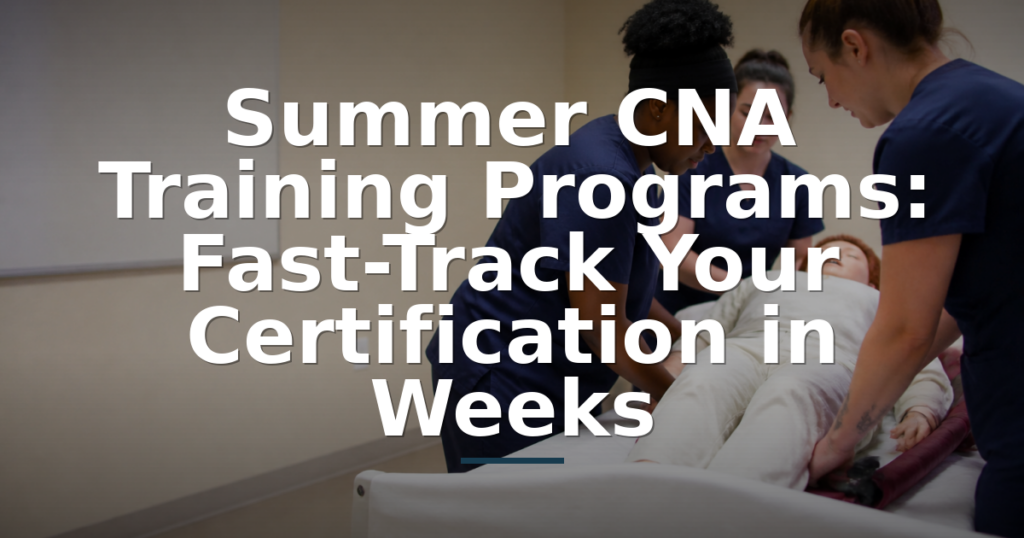
While the textbook learning in a hybrid CNA program happens online, you will complete your clinical rotations in person at a healthcare facility. Most programs partner with local nursing homes, hospitals, or long-term care centers. Some schools also have on-campus skills labs where you practice on mannequins before working with real patients. These in-person sessions let you apply your knowledge under the supervision of a licensed nurse instructor.
Federal regulations set a minimum of 75 hours of supervised clinical training for CNA certification, but many states require 80 to 100 hours or more. Be aware that some hybrid programs go beyond the minimum to boost your confidence and job readiness. For example, a program might include 60 hours in a lab setting plus 40 hours in a nursing home, totaling 100 clinical hours. Always check your state's specific requirements, as exact numbers vary.
One advantage of hybrid CNA training is how clinical hours can be scheduled around your life. Instead of a rigid Monday-through-Friday daytime block, many programs offer: - Weekend intensives: Complete all your hands-on hours over several weekends. - Evening clinicals: Rotations scheduled after typical work hours to accommodate 9-to-5 jobs. - Block scheduling: Concentrated clinicals during a two-week period, often at the end of the online coursework.
This flexibility helps students who cannot put their lives on hold for a full-time, in-person program.
Many hybrid CNA programs maintain strong relationships with local healthcare employers. These partnerships do more than just provide a site for your clinicals: they can lead directly to job offers after certification. Some hospitals and nursing homes host clinical rotations specifically to identify future hires. When researching programs, ask how they handle clinical placement. Some schools guarantee a placement at a partner facility, while others expect you to find your own site. A program that offers placement support can save you time and stress.
Hybrid CNA programs consistently match or outperform traditional in-person training on key metrics that matter most: state exam pass rates, program completion, and career readiness. If you have been wondering whether the flexibility of hybrid learning comes at the cost of quality education, the data tells a reassuring story.
State exam pass rates show that hybrid graduates compete well with traditionally trained peers. According to program outcome data from Carl Sandburg College, hybrid students achieved a first-time pass rate of 92.86 percent in 2021, compared to 85 percent for traditional students.1 By 2024, hybrid programs reported a perfect 100 percent first-time pass rate, while traditional programs came in at 89.5 percent.
These numbers fluctuate from year to year, as you'd expect. In 2023, traditional programs edged ahead with a 95.24 percent pass rate versus 88.89 percent for hybrid learners. However, the overall trend shows that hybrid students are well prepared for certification exams. Structured online coursework combined with hands-on clinical training builds a solid foundation for success.
Program completion rates paint a more nuanced picture. In 2024, hybrid programs reported an 80.5 percent completion rate compared to 73 percent for traditional programs, suggesting that the flexibility of hybrid learning may help more students finish what they started.1 The 2023 data shows similar results, with hybrid programs at 91.5 percent and traditional at 90.5 percent.
However, completion rates have varied more dramatically in earlier years. In 2021, traditional programs showed a significantly higher completion rate of 83.3 percent compared to just 55.6 percent for hybrid options. This variation likely reflects the growing maturity of hybrid program design and better support systems for online learners.
Beyond the statistics, the choice between hybrid and traditional programs often comes down to personal circumstances:
Both formats prepare you for the same certification exam and the same rewarding career. The best choice is the one that fits your life while setting you up to complete the program and pass your state test.
Whether you complete a hybrid program or a traditional classroom course, your certification unlocks the same CNA career opportunities. Employers across long-term care, hospitals, and home health settings focus on state certification and clinical competence, not the delivery format of your training program.
The U.S. Bureau of Labor Statistics projects nursing assistant employment will grow 8 percent from 2023 to 2033, adding roughly 120,000 new positions over the decade.1 As of May 2023, the median annual wage for CNAs stood at $35,7401, though earnings vary widely by setting and region. Home health and long-term care facilities represent the largest and fastest-growing segments, driven by an aging population and the shift toward care delivered outside traditional hospitals.
Current employment for CNAs nationwide exceeds 1.5 million workers1, making it one of the most accessible entry points into healthcare. Because hybrid programs produce graduates with identical state certifications and clinical training hours as traditional programs, employers treat both pathways equally in hiring decisions.
Research into skilled nursing workforce development shows that most employers evaluate candidates on certification status, clinical competence, and professionalism rather than training format.2 Facilities using virtual orientation and compliance training for existing staff have grown comfortable with blended learning models. Hiring managers consistently report that state certification and demonstrated hands-on skills matter far more than whether didactic coursework happened online or in a classroom.
This employer neutrality gives hybrid graduates full access to the same job openings, shift options, and advancement opportunities as their traditionally trained peers. Your resume reflects your credential and clinical placement experience, not your lecture delivery method.
Many CNAs use their role as a stepping stone to advanced nursing credentials. The typical progression follows a clear path:
Stackable credentials mean each step builds on the last. Employers in hospital systems and large long-term care organizations frequently provide tuition assistance or reimbursement for CNAs pursuing LPN or RN degrees, recognizing that investing in staff education reduces turnover and strengthens clinical teams. If you complete a hybrid CNA program while balancing work or family, the same time-management skills transfer directly to part-time LPN or online RN bridge coursework.
Hybrid CNA training does not close doors. It opens them on a schedule that fits your life, with full recognition from the employers and schools that matter most to your career growth.
A CNA credential opens the door to a stable healthcare career, but it doesn't have to stop there. Many CNAs use their experience as a stepping stone to higher-paying roles like LPN and RN, often with employer tuition assistance. Here's a typical progression and what you can expect to earn along the way.

Canvas, one of the most widely adopted platforms in healthcare education, serves as the learning management system for many hybrid CNA programs in 2026. Knowing what your online classroom looks like before you enroll removes a lot of first-week anxiety, so here is a practical walkthrough of what to expect.
Most hybrid CNA programs deliver their theory component through a structured LMS, with Canvas being a common choice. Inside the platform you will typically find pre-recorded video lectures, assigned readings, discussion boards where classmates share questions and observations, and weekly quizzes that check your understanding before you show up to clinical. Live sessions are usually hosted via Zoom, giving you real-time access to your instructor, who in many programs is a licensed RN.4 Progress tracking runs in real time, so both you and your instructor can see which modules you have completed and where you might need to catch up.
Plan to commit roughly 10 to 15 hours per week to the online portion.3 Across a full program, that online theory work typically totals around 60 hours, with the complete program running 100 to 160 hours over 4 to 6 weeks.3
The good news is that the tech bar is not high. You will need:
Many programs connect students to technical support around the clock,5 so a login problem at 11 p.m. the night before a quiz does not have to derail your progress.
Instructors are typically reachable by email or chat, and most programs supplement that with tutoring services and peer study groups organized through the LMS. If you hit a concept that is not clicking after a video lecture, you have multiple ways to get help rather than waiting for the next in-person session.
Student satisfaction with this format is consistently high. According to Nurse Assistant Training data, hybrid CNA programs in 2026 carry an average student satisfaction rating of 4.5 out of 5, and leading LMS platforms used in nursing education score 4.8 out of 5 in nursing education software. The self-paced online component is the feature students most often praise, because it lets them review difficult material as many times as they need before stepping into the clinical setting.
Below you'll find answers to the most common questions about hybrid CNA programs. Whether you're curious about state approval, costs, or what employers think, we've got you covered.
Yes, you can complete the classroom portion of CNA training online through state-approved hybrid programs. These programs pair online learning with mandatory in-person clinical rotations to ensure you gain hands-on skills. The online part covers theory, such as infection control and patient rights, while labs and clinicals take place at approved healthcare facilities. This combination makes CNA education accessible for busy schedules.
Skills training is handled through scheduled in-person lab sessions and clinical rotations at local hospitals or nursing homes. You practice essential tasks like taking vital signs, bathing patients, and safe transfers under instructor supervision. The online coursework pre-teaches the steps, so you arrive prepared for hands-on practice. This model ensures you meet all state competency requirements.
Yes, legitimate hybrid CNA programs are approved by the state's nursing board or department of health. Always verify that the program is on your state's official approved list before enrolling. Accreditation from bodies like state agencies or the Board of Nursing confirms the curriculum meets quality standards and that graduates are eligible to sit for the state competency exam.
Hybrid CNA programs often cost less than traditional in-person classes because they reduce facility and commuting expenses. Tuition ranges from $800 to $2,000 on average, similar to on-campus options, but you save on transportation, parking, and sometimes materials. Many programs also offer payment plans, and some employers or workforce grants cover the cost.
Employers value hybrid-trained CNAs as much as traditionally trained ones, as long as they graduate from a state-approved program and pass the certification exam. The clinical hours and hands-on skills are identical. Many employers appreciate the self-discipline and time management skills that hybrid students develop. Hiring managers focus on your competency and licensure, not the training format.
Most hybrid CNA programs take 4 to 12 weeks to complete, depending on the schedule and state-required training hours. Full-time students may finish in a month, while part-time and evening options extend to three months or more. The online portion can be completed at your own pace within deadlines, and clinical hours are scheduled in blocks.
Many hybrid CNA programs offer job placement assistance, such as resume workshops, interview coaching, and connections with local healthcare employers; for more strategies, see our guide to landing your first CNA job. Some partner with nursing homes and hospitals that hire graduates directly. While not guaranteed, career support services are common and can give you a head start in the job market after earning your certification.
The job outlook for CNAs is strong, with employment projected to grow faster than average as the population ages. According to the Bureau of Labor Statistics, CNAs earn a median annual wage around $36,000, though pay increases with experience, shift differentials, and specialization. Hybrid training does not affect salary; your certification and skills determine earning potential.
Self-paced hybrid CNA classes and cohort-based hybrid CNA classes both put core theory online, but they take opposite approaches to time. A self-paced format lets you move through on-demand video modules and flexible quiz deadlines on your own rhythm. A cohort format keeps everyone moving together on a published calendar with fixed class, lab, and clinical dates.
Self-paced does not mean no deadlines. A typical model may ask you to finish around 76 hours of online theory within a four-week window before scheduled skills labs and clinicals begin. Instructors are available through virtual office hours, learning management system messages, or periodic live reviews rather than real-time lectures for every module. That works well for students with changing shifts, but it requires planning: if you fall behind on units, you can miss the in-person components tied to those dates.
Cohort-based hybrid classes publish exact meeting times. One example is roughly 60 hours of live online theory over about 10 days, followed by a fixed clinical block. This structure reduces planning and can be easier for students who want external momentum, though it is less flexible for rotating or weekend work schedules.
No state approves a fully online CNA program. Federal minimums set 75 total training hours with at least 16 clinical hours, and many states require 80 to 100 or more. Virtual demonstrations do not count toward clinical hours. Whether you choose self-paced or cohort-based, your in-person skills lab and clinical training remain required.