Your Guide to In-House CNA Training: Get Paid to Become a CNA
Discover employer-sponsored training that pays you while you learn, with immediate job placement in hospitals, nursing homes, and long-term care facilities.
By Koko MouchmouchianReviewed by Editorial staffUpdated July 27, 202617 min read
Key Points
Three-week paid CNA programs like Shaker Place's lead to certification and employment.
In-house programs often pay students while combining classroom and clinical training.
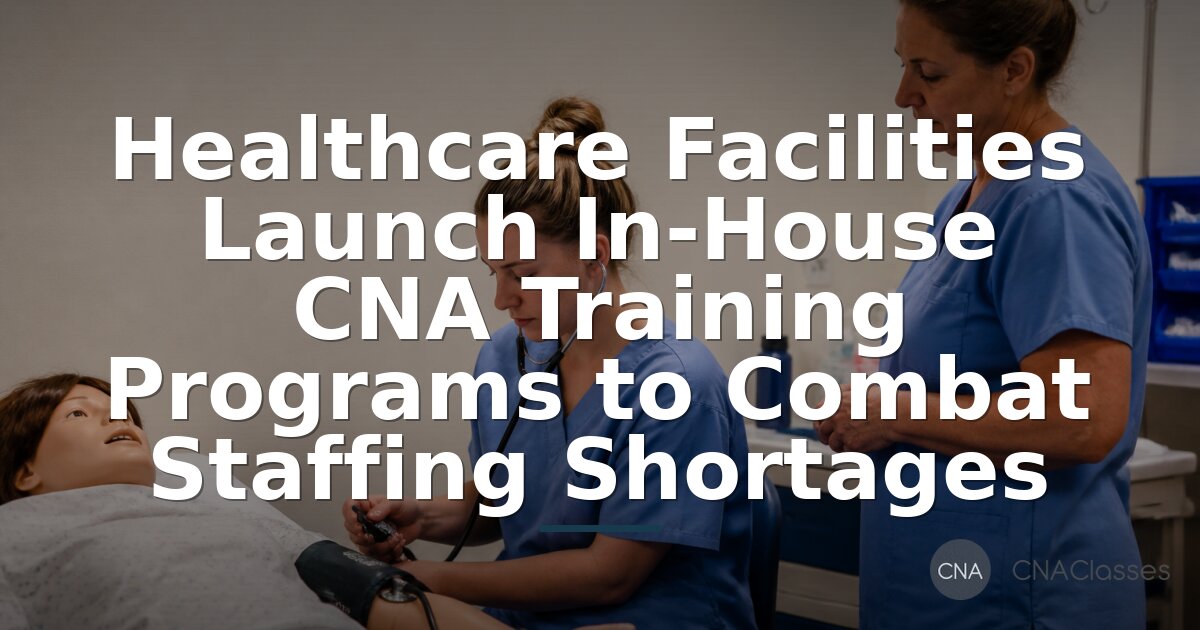
The traditional path to becoming a CNA often means paying tuition and taking months to finish, but a new wave of employer-run programs is flipping that model, offering paychecks and job offers upfront. Shaker Place Rehab in Albany just graduated its fourth class of a three-week paid CNA training, a recent CNA success story that's part of a growing trend among nursing homes and hospitals. This shift is reshaping entry into healthcare, driven by facilities desperate to fill empty shifts.
Why Healthcare Facilities Are Launching Their Own CNA Programs
Why are nursing homes, hospitals, and assisted living centers increasingly choosing to train their own certified nursing assistants instead of relying solely on external programs? The answer lies in a persistent, industry-wide staffing crunch that has only intensified in recent years. As demand for long-term and acute care services grows, many facilities find that traditional CNA training partnerships, such as community colleges and private training schools, simply cannot graduate enough CNAs to fill their vacancies. Rather than wait months for new hires who may never arrive, employers are taking matters into their own hands.
A Growing Gap in Care
Healthcare organizations across the country face a frustrating reality: vacancy rates for direct care positions remain stubbornly high, and turnover among newly hired aides, mirroring broader CNA employment trends, often spikes within the first year. Several forces drive this gap. An aging population requires more hands-on assistance with daily living activities. Experienced nursing assistants leave the field due to burnout, physical demands, or better-paying opportunities in other sectors. Meanwhile, enrollment in many standalone CNA programs has not kept pace with the need, especially in rural or underserved areas. The result is a bidding war for a limited pool of qualified workers, a contest that smaller or budget-conscious facilities often lose.
The Case for In-House Training
Building a training program inside a facility addresses these problems at their roots. Employers can recruit candidates who live nearby, show genuine interest in the mission, and might otherwise be unable to afford tuition. By offering employer-sponsored CNA training that leads directly to a job, facilities create a reliable pipeline of caregivers who already understand the culture and residents. This approach reduces recruitment advertising costs, cuts down on the time required to get new staff to the floor, and tends to improve retention: graduates often feel a sense of loyalty to the organization that invested in them. For students, the appeal is equally clear: no out-of-pocket costs, immediate income, and a clear path from classroom to career. As the pressures mount, more healthcare employers are concluding that the old model of posting a job listing and hoping for applicants is no longer sufficient.
What Are In-House CNA Training Programs?
In-house CNA training programs are employer-provided pathways that combine classroom instruction, hands-on clinical practice, and a direct route to certification, all within the walls of a healthcare facility. Unlike traditional routes through community colleges or private training schools, these programs are designed, funded, and taught by the employer itself, often a nursing home, hospital, or rehabilitation center.
How They Differ from Traditional CNA Training
Cost: Most in-house programs are free or even paid, eliminating tuition barriers. Traditional school-based programs can cost hundreds to thousands of dollars.
Duration: They are typically accelerated, sometimes lasting only a few weeks, compared to the several months required in a college setting.
Clinical Experience: You learn directly on the actual units where you might work, using the same equipment and patient populations, making the transition to employment seamless.
Job Security: Graduates are almost always guaranteed a job at the sponsoring facility, so you walk off the training floor into a steady position.
These programs are state-approved and culminate in the same Certified Nursing Assistant (CNA) competency exam you would take after any other state-recognized program. For aspiring CNAs, they represent a fast, affordable, and career-focused entry point into healthcare.
CNA Salary at a Glance
According to the latest data from the U.S. Bureau of Labor Statistics, the median annual wage for nursing assistants nationwide is $39,530, though actual pay can vary significantly based on location, experience, and the type of healthcare facility.
How In-House CNA Training Works: Structure, Length, and Pay
Today, prospective CNAs can earn while they learn through employer-driven training models that compress certification into weeks instead of months.
Classroom and Clinical Training Under One Roof
In-house programs blend state-required classroom hours with hands-on clinical practice, often inside the very facility where graduates will work. Theory sessions cover infection control, resident rights, and basic nursing skills, while clinical rotations let trainees practice feeding, bathing, and mobility assistance under supervision. Because the classroom and clinical site are the same, instructors tailor lessons to the unit types and care routines candidates will face as employees.
Program Length: From Weeks to Months
Duration varies by employer and state requirements. Accelerated tracks like the one at Shaker Place Rehab in Albany, New York run just three weeks full-time. Other facilities stretch training over four to eight weeks to accommodate part-time schedules or deeper skill-building. Most programs count every hour toward the minimum instructional time needed for state certification.
Getting Paid While You Learn
Unlike traditional CNA classes that charge tuition, in-house programs usually pay trainees during training, often at least the state minimum wage. Some employers provide an additional stipend or cover exam fees. Because you are a paid employee from day one, you may also receive benefits such as health insurance, shift differentials, or meal allowances. This earn-as-you-learn structure removes financial barriers and lets you focus on mastering skills without worrying about tuition bills.
In-House CNA Training Programs: Examples Across the U.S.
Healthcare facilities nationwide are launching their own in-house CNA training to combat staffing shortages. The table below highlights a range of programs, from county-owned nursing homes to hospital-based initiatives, offering paid training and employment commitments. Use this to compare durations, pay, and post-training requirements across different settings.
Facility
Location
Duration
Pay During Training
Employment Commitment
Notes
Shaker Place Rehabilitation & Nursing Center
Albany, New York
4-6 weeks
N/A
N/A
County-owned; public-sector benefits; training cost covered for qualifying employees
Wisconsin Hospital-Based CNA Training
Wisconsin
3 weeks
$15 per hour
18 months
WI State Certified; clinicals in hospital; BLS certification required within 2 weeks; must attend all sessions
Sunnyvale Skilled Nursing Facility
Sunnyvale, California
4-8 weeks
N/A
N/A
CDPH approved facility-based NATP; qualifies for CA Nurse Aide Competency Evaluation
Lansing Nursing Home
Lansing, Illinois
4-12 weeks
N/A
N/A
IDPH-approved; on-the-job clinical experience; tuition-free for committed employees
Representative Employer-Sponsored CNA Program
Various states (PA, OH, TX, etc.)
4-12 weeks
N/A
6-12 months
Guaranteed job placement; benefits eligibility; may coordinate with Workforce Development/WIOA funding
What You Need to Know About Employment Commitments and Contracts
Effective January 1, 2026, California banned mandatory training repayment agreements for most employees, though existing contracts aren’t retroactively voided.1 This shift highlights how critical it is to understand the fine print before enrolling in any employer-sponsored CNA program, especially since many states still allow these arrangements.
Typical Employment Commitments
Most in-house CNA training programs require a work commitment at the sponsoring facility after certification, typically 6 to 12 months.4 For example, a CNA Residency Program offers a 6-week training block followed by a 1,800-hour work commitment, roughly 12 months of full-time hours.2
Consequences of Leaving Early
If you depart early, facilities often charge a repayment fee, which may be pro-rata or the full training cost. A common model, based on the University of North Dakota’s sponsorship agreement, looks like this:3
0, 3 months: you repay 100% of the training expenses
4, 6 months: 75% repayment
7, 9 months: 50% repayment
10, 11 months: 25% repayment
After 12 months: no repayment owed
Payment is usually due within 30 days. Other programs may demand immediate full reimbursement regardless of how long you worked. Always confirm which model applies.
State and Local Variations
Laws are changing. California’s ban now protects workers who did not voluntarily seek outside training, but rules vary by state. Some states cap repayment amounts; others have no restrictions. Check whether your state treats these as employment contracts or educational agreements, as the legal distinction affects enforceability.
Reading Your Contract Carefully
Before signing, request a written copy of the full agreement. Review the commitment length, the exact repayment formula, and any conditions that might void the penalty, such as being laid off or a medical emergency. Ask what counts as an early departure and whether repayment covers only direct tuition costs or also supplies, uniforms, and exam fees. Get these details in writing to avoid surprises.
Types of In-House CNA Programs: Hospitals vs Nursing Homes vs Other Employers
Hospital-Based Programs
Hospitals that offer in-house CNA training often design their curriculum to reflect the fast-paced acute-care environment. These programs may place extra emphasis on skills like monitoring vital signs, assisting with patient mobility, and adhering to strict infection-control protocols. Because hospitals frequently need CNAs for medical-surgical floors, emergency departments, and specialty units, graduates may gain exposure to a wider range of clinical cases than they would in a long-term care setting. Training at a hospital can also provide early access to tuition reimbursement or bridge programs for those considering CNA to RN programs. Starting wages in hospital settings may also be slightly higher than in nursing homes.
Nursing Home and Long-Term Care Programs
Long-term care and skilled nursing facilities run the most common in-house CNA training programs. The curriculum here tends to focus heavily on daily living assistance, bathing, feeding, and transferring residents, as well as managing chronic conditions like dementia. These employers often design their programs to quickly fill staffing gaps, which can mean more frequent start dates and shorter training cycles. A major advantage is that the training environment closely mirrors the day-to-day work, so graduates may feel more confident on the job from day one.
Other Employer-Sponsored Programs
Beyond hospitals and nursing homes, a growing number of home health agencies, assisted living communities, and even rehabilitation centers now run their own CNA programs. Home health home health aide training often adds a focus on independent care delivery, safety in private residences, and building rapport with clients one-on-one. Assisted living programs may blend elements of both acute and long-term care. These settings sometimes offer a middle ground for individuals who want the stability of a single employer but prefer a less clinical or more flexible work atmosphere than a hospital provides.
Regardless of setting, all in-house programs share a central promise: paid, hands-on training that leads directly to certification and a job. The right fit depends on your preferred work pace, the population you want to serve, and your long-term career goals in healthcare.
Did you know? Employment of nursing assistants is projected to grow just 2 percent from 2024 to 2034, yet many healthcare facilities are creating their own paid training programs to meet immediate staffing needs. Source: Bureau of Labor Statistics.
In-House vs Community College CNA Training: Which Path Is Right for You?
Choosing between an employer-run training program and a traditional community college course means weighing two different experiences that both end with the same certification. In-house programs are offered directly by hospitals, nursing homes, or other healthcare facilities, often with paid training and a job waiting at the end. Community college programs give you a broader educational setting and the flexibility to shop around for employment after you pass the state exam.
Pass Rates and Test Performance
First-time CNA certification pass rates are strikingly similar between the two paths. Both report overall pass rates in the range of 70% to 90% in 2026, with written test performance slightly higher (87-93%) than the skills demonstration (78-85%).1 This means you can feel confident in the quality of instruction no matter which route you pick.
What Happens If You Don’t Pass?
Both in-house and community college pathways follow the same retake rules set by your state. You only need to retake the section you failed, not the entire exam.2 Most states allow up to three attempts.3 Employer programs often build in extra hands-on practice or one-on-one coaching if you need it because they have a stake in seeing you succeed and join their team. Community colleges typically offer tutoring centers or review sessions for struggling students.
Beyond the Classroom
The real difference comes down to structure and commitment. In-house training is typically faster, fully paid, and ties you to a specific employer for a set period. Community college programs may take longer, cost tuition, and let you explore job options freely afterward. If you learn best by working alongside experienced staff and value a guaranteed paycheck from day one, a facility-led program could be the perfect fit. If you prefer a traditional classroom pace and want to keep your career options open, community college might feel more comfortable.
How to Find and Apply for In-House CNA Training Programs
Landing a paid CNA training slot often comes down to where you look, and who you ask. These employer-driven programs don't always advertise broadly, so a targeted search is essential.
Tap State Health Department Lists
Every state maintains a registry of approved nurse aide training programs because facilities must meet federal and state standards to operate in-house classes.3 For example, the New York Department of Health publishes a list of state-approved facility-based programs, the Indiana Department of Health oversees all nurse aide training, and California's Department of Public Health accredits providers.1 Visiting your state's health department website and navigating to "Nurse Aide" or "CNA Training" is the most reliable starting point.
Explore Workforce Development Boards
Local workforce boards and One-Stop job centers often partner with healthcare employers to fill staffing gaps. In Kansas, for instance, the KansasWorks site lists a 90-hour Certified Nurse Aide program that combines online theory with in-house clinicals. These boards can connect you with grant-funded or employer-sponsored training opportunities you won't see elsewhere.
Use Job Boards Strategically
Search generic job sites like Indeed or Glassdoor, but use filters. Try keywords such as "paid CNA training," "nurse aide training employment," or "earn while you learn CNA." Look for postings from nursing homes, hospitals, and staffing agencies that mention immediate employment upon completion.
Contact Employers Directly
Many facilities, especially nursing homes, rarely post training openings online. Call or visit local nursing homes, rehabilitation centers, and hospitals and ask to speak with human resources or the staff development coordinator. Inquire about upcoming CNA classes, application requirements, and any employment commitments. Programs like Shaker Place Rehab's 3-week paid class in Albany, New York, prove that in-house training can be fast and fully paid, but you have to ask to find it.2
Spotlight: Shaker Place Rehab’s 3-Week Paid CNA Training Program
Can you really get paid to become a CNA in just three weeks? Shaker Place Rehabilitation and Nursing Center in Albany, New York, has proven that it’s possible, and has now celebrated its fourth graduating class. As reported by WNYT, the latest cohort included 21 students who completed the intensive, paid, full-time program.
How the program works
The three-week training blends classroom instruction with hands-on clinical practice at the facility. Students are paid employees during training, earning while they learn. The curriculum is fast-paced but thorough, covering all essential nursing assistant skills. At the end, graduates are fully prepared to sit for the New York State Department of Health CNA certification exam.
Why Shaker Place launched it
The in-house program was designed to address two critical needs: filling staffing shortages and giving residents consistent, well-trained caregivers. By investing in local talent, Shaker Place creates a direct pathway from training to employment, with many graduates staying on as staff. For aspiring CNAs, it’s a low-risk entry point into an entry-level medical career with immediate hands-on experience.
Your Questions Answered: In-House CNA Training FAQ
In-house CNA training programs are becoming a popular way to launch a healthcare career without tuition debt. Below are answers to the most common questions about how these programs work, from costs to commitments.
Which employers offer paid CNA training with guaranteed jobs?
Nursing homes, hospitals, and rehab centers frequently offer paid CNA training with a job upon certification. Examples include Evergreen Living Center, Southcoast Health, and South County Health. You earn an hourly wage during training (often $12-$17) and commit to work for 6-12 months afterward.1
How long do in-house CNA training programs last?
These programs are accelerated, typically lasting 4 to 12 weeks. Evergreen Living Center completes training in 4 weeks, South County Health in 8 weeks, and some hospital-based programs may run up to 12 weeks, combining classroom learning with clinical practice.
Are in-house CNA programs truly free and what are the commitments?
Yes, most programs cover all training costs and may even pay you while you learn. In return, you agree to work for the facility for a set period, often 6-12 months. For instance, Evergreen requires a 6-month commitment, while Southcoast Health asks for 12 months.1
What happens if you fail the CNA exam during employer training?
Policies vary, but many employers allow one or more retakes and may cover the retest fee. If you fail after multiple attempts, you could be required to repay training costs or be released from employment. Always clarify the retake policy before starting.
Can I leave an employer-sponsored CNA program early if I want to?
You can leave at any time, but early departure often triggers a repayment obligation for training expenses. Some programs prorate the amount based on how long you worked. Read your contract carefully to understand financial penalties for not completing the commitment.
Do I need a high school diploma or GED to enroll in an in-house program?
It depends on the employer. Southcoast Health requires a diploma or GED, while Essentia Health does not. Most programs require a minimum age of 17 or 182 and a background check.1 Some may also test basic math and reading skills.