Key Points
- MGCCC Perkinston offers a 100-hour CNA program in just 10 weeks.
- CNA training costs as little as $610, or free through WIOA grants.
- Gulf Coast nursing assistants earn $31,520 median yearly with high demand.

Get program costs, admission steps, and clinical hour details for CNA training in Perkinston, MS.

How quickly can you start working in healthcare near Perkinston, MS? With CNA training programs as short as 10 weeks and total costs often under $610, the path from classroom to bedside is one of the fastest in the industry.
Perkinston-area students can train locally at Mississippi Gulf Coast Community College or choose a hybrid format that pairs online coursework with required clinical hours. Median CNA wages in the Gulfport-Biloxi-Pascagoula metro area reached $31,520 annually, and hundreds of openings are projected across the Gulf Coast through 2026 and beyond. Financial assistance through WIOA and employer-sponsored apprenticeships can bring out-of-pocket costs to zero for eligible applicants.
Choosing between employment close to home or commuting to larger facilities along the Gulf Coast shapes many new CNAs' early career decisions. Perkinston sits in Stone County, a rural area where nursing homes and home health agencies provide most CNA positions, while the Gulfport and Biloxi corridor offers hospitals, veterans' homes, and specialized senior living communities with more varied schedules and often higher pay.
The Stone County Rehabilitation and Nursing Center in nearby Wiggins regularly hires CNAs, including PRN (as-needed) positions5 that suit students or those balancing other responsibilities. Azalea Gardens Nursing Center, also serving the Perkinston and Wiggins area, advertises CNA wages starting around $15 per hour3. These facilities emphasize long-term care, so daily tasks center on helping residents with bathing, dressing, mobility, and meal assistance.
Driving 30 to 45 minutes south opens access to a broader job market. Summerfield Senior Living in Gulfport and Summerhouse Bay Cove in Biloxi actively recruit CNAs6, with some positions offering 12-hour shifts that compress a full workweek into fewer days. The Mississippi State Veterans Home in Tradition hires CNAs8 to support aging veterans, combining clinical duties with a mission-driven environment. Hospitals throughout the Gulfport metro area also employ nursing assistants in acute care, rehabilitation, and emergency departments.
Home health agencies dominate the region's private-sector CNA employment. Comfort Keepers in Gulfport pays between $12.75 and $15.75 per hour4, while Senior Helpers and Home Helpers Home Care offer flexible scheduling and, in some cases, paid orientation6. Genesis Homecare Agency advertises hourly rates from $14 up to $2510 for experienced aides or those willing to take on specialized assignments. Right at Home and Infinity Home Care Services also hire CNAs and Home Health Aides across the Mississippi Gulf Coast, providing in-home assistance for clients who prefer to age in place.6
Regardless of setting, CNAs in this region spend most shifts measuring vital signs, repositioning patients to prevent bedsores, documenting intake and output, and communicating changes in condition to supervising nurses. In nursing homes, you build relationships with the same residents over months or years. In home health, you work one-on-one in clients' homes, often handling light housekeeping and meal preparation alongside personal care. Hospitals rotate you through different units, exposing you to a wider range of medical conditions.
Active job postings across Stone County and the Gulfport corridor number in the hundreds9, and wages typically range from $12 to $15 per hour for entry-level roles6. Demand remains steady as the Gulf Coast's aging population continues to grow, making CNA Classes in Mississippi a practical first step toward stable healthcare employment.
Mississippi does not permit fully online CNA training because the state requires hands-on skills practice and in-person clinical experience. However, several approved CNA programs now offer hybrid options that let you complete the theory portion online while still meeting the in-person requirements. This blend can save you commute time and make it easier to fit coursework around a job or family schedule.
The Mississippi State Department of Health (MSDH) oversees all nurse aide training programs and mandates that every student complete a set number of clinical hours in a real healthcare setting.1 You cannot earn a CNA certification in Mississippi without showing that you can safely perform essential tasks like taking vital signs, transferring patients, and providing personal care. Any program that advertises “fully online” CNA training is not approved by the state and will not qualify you for the certification exam.
Several MSDH-approved providers offer a hybrid model that combines online coursework with in-person skills labs and clinical rotations. For students near Perkinston, the most convenient option is Mississippi Gulf Coast Community College’s (MGCCC) Perkinston campus. Its program includes 84 hours of online or on-campus theory instruction plus 16 hours of supervised clinical practice, giving you a mix of flexibility and hands-on learning.2
Other approved hybrid programs in Mississippi include:
You can request a complete list of approved programs directly from the Mississippi State Department of Health.5
In typical hybrid CNA classes, you will study anatomy, infection control, patient rights, and other topics online at your own pace. Then you will attend scheduled in-person sessions to practice skills on mannequins and real patients under an instructor’s supervision. The clinical hours take place in a nursing home or hospital, where you will work directly with residents. This approach ensures you get the same quality of training as a traditional classroom course while offering more control over your study schedule.
Since the COVID-19 pandemic, many Mississippi training providers have expanded their hybrid offerings to meet student demand for flexible scheduling. While no temporary waivers for clinical hours are currently in effect,1 the trend toward blended learning has made it easier for busy adults to start a healthcare career. Be sure to verify any program’s current delivery method before enrolling, as in-person requirements remain firm.
Mississippi requires all nursing assistants to complete 75 hours of state-approved training and pass a national competency exam CNA testing before practicing in any healthcare facility. The Mississippi State Department of Health (MSDH) oversees the certification process and maintains the official Nurse Aide Registry, which employers use to verify credentials.1
Every CNA candidate in Mississippi must complete at least 75 hours of approved training, which includes a minimum of 16 hours of supervised clinical practice in a real healthcare setting.2 These clinical hours give you hands-on experience with patient care tasks like bathing, feeding, vital signs, and mobility assistance under the supervision of a registered nurse. The training program covers basic nursing skills, infection control, safety procedures, communication, and patient rights.
After finishing your training, you must pass the National Nurse Aide Assessment Program (NNAAP) exam to earn Mississippi certification. The exam has two parts: a written or oral test ($32) and a hands-on skills demonstration ($69). During the skills portion, you will perform five randomly selected tasks in front of an evaluator to prove you can deliver safe, competent care. You must pass both components, though you can retake individual sections if needed.
Mississippi requires a criminal background check and drug screening before you can enroll in most CNA programs or sit for the competency exam. You will also need proof of immunizations (typically MMR, hepatitis B, varicella, and Tdap) and a negative tuberculosis test. These health and safety requirements protect both patients and staff in clinical settings.
Your Mississippi CNA certification remains active for 24 months as long as you work at least 8 hours in a paid nursing assistant role during that period.3 If you do not work for two consecutive years, your certification lapses and you must retake the full competency exam to be placed back on the registry. Mississippi does not require continuing education for renewal, but maintaining active employment automatically keeps your credential current. If you earned certification in another state and it has expired, you will need to retake the NNAAP exam rather than transfer by endorsement.
Healthcare employers across the Gulf Coast continue to compete for qualified nursing assistants, driving wages and benefits higher than in many rural Mississippi markets. In the Gulfport-Biloxi-Pascagoula metro area, nursing assistants earned a median annual wage of $31,520 as of 2025, with approximately 1,660 CNAs employed across hospitals, nursing homes, and home health agencies throughout the region.
The Gulfport metro wage sits slightly above Mississippi's statewide median of $31,000 for CNAs in 2026, though both figures trail the national median of $39,530 reported in 2024. Entry-level CNAs in Mississippi typically start around $27,050 annually (10th percentile), while experienced professionals in high-demand settings can earn up to $38,290 (90th percentile). The median hourly rate in the Gulfport area is $14.622, translating to a realistic starting point for new graduates entering the workforce. Most CNAs in the region find their first positions within nursing homes or rehabilitation centers, where baseline pay aligns closely with these figures.
Nationwide, the Bureau of Labor Statistics projects 2 percent annual growth for nursing assistant positions through 20341, with approximately 211,800 job openings each year driven largely by workforce turnover and retirements. The Gulf Coast region mirrors this steady demand, particularly as Mississippi's aging population requires more skilled long-term care. Coastal casinos, resort hotels with assisted living services, and expanding medical centers in Gulfport and Biloxi create additional opportunities not found in inland rural communities.
Many Gulf Coast healthcare facilities offer financial incentives to fill evening, overnight, and weekend shifts. Night shift differentials typically add $1.50 to $3.00 per hour, while weekend premiums range from $1.00 to $2.00 per hour on top of base pay. CNAs willing to work 12-hour shifts or accept on-call assignments often qualify for overtime at time-and-a-half, particularly during flu season or summer vacation periods when staffing runs lean. These differentials can boost annual earnings by $3,000 to $6,000 for CNAs who consistently take less-desirable hours, making the Perkinston area an attractive launch point for career-focused healthcare professionals.
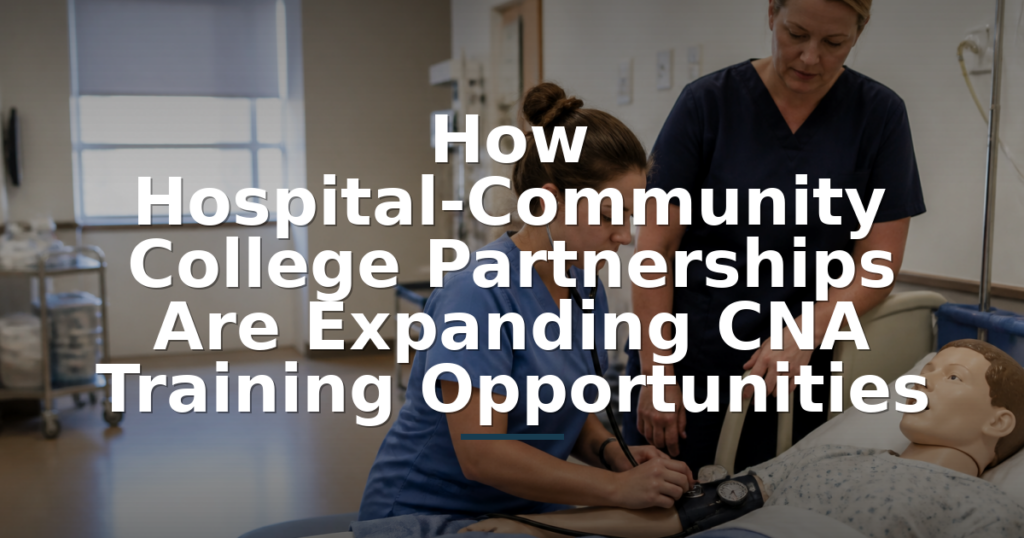
Mississippi Gulf Coast Community College's CNA program runs 100 hours1 in just 10 weeks3, making it one of the more compact training paths you will find in the region. If you are looking to earn your Certified Nursing Assistant credential without spending a year in a classroom, this program is worth a close look.
The Spring 2026 cohort began January 26, with an application deadline of January 123. Classes meet two evenings per week, which means the schedule is designed with working adults in mind. You do not have to quit a job or rearrange your entire life to attend. The program runs in a hybrid format1, so some coursework is completed online while in-person sessions cover the hands-on skills you cannot learn from a screen.
Future start dates are not always posted far in advance, so check directly with MGCCC or visit cnaclasses.org for updates on upcoming cohorts.
The total program cost for 2025-2026 is $7001, which covers tuition and course fees. Beyond that baseline, plan for a few additional expenses:
All told, most students should expect to spend somewhere in the range of $900 to $1,100 when you factor in every requirement. That is still a fraction of what many other healthcare programs cost.
The program requires 16 clinical hours1 completed at a local care facility. These hands-on rotations put you in an actual patient care environment before you ever sit for your certification exam. MGCCC has established partnerships with regional facilities to support these placements, though specific site assignments can vary by cohort. Your instructors coordinate the placement process, so you are not left to find a facility on your own.
BLS CPR training is included in the program2, so you will leave with that credential alongside your CNA preparation.
MGCCC offers the kind of student support you would expect from a community college, including academic tutoring and access to counseling services. For career-specific guidance, the college's workforce development staff can connect you with job search resources and local employer contacts. The healthcare demand in Stone and Harrison counties means many graduates receive interest from area facilities before they even complete the NNAAP exam1. If you want help navigating next steps after graduation, those resources are available on campus.
Mississippi Gulf Coast Community College streamlined its workforce healthcare enrollment process in 2024, and today applicants work through a non-credit registration pathway designed specifically for CNA students. Understanding each step and gathering documents early keeps you on track for your chosen start date.
Before submitting your application, confirm you meet the baseline cna requirements. You need a high school diploma or GED1, and you must demonstrate college readiness through an ACT composite of 18 or higher, or by scoring 3 or above in each section of the Computerized Readiness Center (CRC) exam. Current high school seniors in their final semester may apply with a school recommendation and proof they are on track to graduate.2
Healthcare training involves direct patient contact, so MGCCC mandates a physical examination, current immunizations (MMR, Hepatitis B, Varicella, Tdap, and TB test)1, and verification of all records. You will also complete a criminal background check (65 dollars)1 and drug screening (35 dollars)1 before beginning clinicals. Budget time to schedule your physical and collect immunization records from your doctor or local health department, since providers often need a week or more to compile documentation.
Apply through MGCCC's non-credit healthcare registration form.2 After submission, you will take any required placement testing if you do not already have qualifying ACT or CRC scores. Once the college reviews your academic readiness, you will receive instructions to upload or mail your immunization records and complete the background check and drug screening through the designated vendor.
Course start dates vary by semester, and registration deadlines typically fall three to four weeks before the first class meeting. For example, a fall cohort with a first class in late October had an application deadline of October 1, 20251. Check the MGCCC Perkinston campus workforce training page or call the admissions office for the exact deadline tied to your preferred session. Spaces fill quickly, so aim to submit everything at least a month ahead of the cutoff.
CNA training in Perkinston offers one of the most affordable pathways into healthcare, with total costs ranging from free apprenticeships to approximately $610 for community college programs.
Mississippi Gulf Coast Community College (MGCCC) offers the primary CNA program accessible to Perkinston residents, with total program cost of $610 for the 2025-2026 academic year. This fee typically covers tuition, required materials, and clinical training expenses. The program operates through MGCCC's Continuing Education division, with classes held at the Harrison County campus.
Saad Healthcare operates a private CNA program in the region at $375,2 representing a lower-cost alternative to the community college route. Private programs often offer more flexible scheduling but may have different clinical placement arrangements.
Several healthcare employers in the Gulf Coast area eliminate training costs entirely through apprenticeship programs. Singing River Healthcare Academy and Memorial Hospital in Gulfport both offer zero-cost CNA apprenticeships that combine classroom instruction with paid on-the-job training. Memorial Hospital provides tuition assistance for its participants, effectively removing all financial barriers for accepted applicants.
Gulfport Job Corps offers a no-cost CNA program for young adults ages 16 to 24, combining vocational training with housing and support services for eligible participants.3
The Workforce Innovation and Opportunity Act (WIOA) represents the primary funding source for Mississippi residents pursuing CNA certification. Eligible participants, including low-income individuals, unemployed workers, and dislocated workers, can receive coverage for tuition, fees, books, uniforms, and exam costs.2 Applications are processed through WIN Job Centers located throughout the state.
The Mississippi Community College Board administers workforce training scholarships that may cover CNA programs at MGCCC.2 Students enrolled in credit-bearing healthcare programs may qualify for state grants including MTAG, MESG, and HELP through the Mississippi Office of Student Financial Aid, though traditional CNA certificates are typically non-credit offerings.3
The Mississippi Gulf Coast regional workforce board coordinates additional funding for healthcare training in collaboration with local employers facing nursing assistant shortages.2 Contact your nearest WIN Job Center to discuss eligibility and application procedures for WIOA and regional workforce grants.
Many training providers, including MGCCC, offer payment plans that divide program costs into manageable monthly installments, making training accessible even without upfront funding.
Below are the top CNA programs serving Perkinston students, ranked by affordability, program content, and student support. The list draws from the most recent IPEDS and College Scorecard data.
Perkinston, MS · ~$7,000/yr (est.)
Best for: Local Perkinston students pursuing hybrid training
Mississippi Gulf Coast Community College, located right in Perkinston, offers a state-approved hybrid CNA program that blends online theory with hands-on clinical practice. With a total cost of $700 and clinical placements in local long-term care facilities, it provides a direct path to certification and employment in the Gulf Coast region. The program prepares students for the NNAAP exam and is designed for rapid entry into the healthcare workforce.
Poplarville, MS · $4,000 – $6,000/yr
Best for: Cost-conscious learners near Poplarville and Hattiesburg
Pearl River Community College, based in Poplarville with an additional campus in Hattiesburg, offers a flexible CNA program through its Workforce Education division. The 96-120 hour training includes both classroom and clinical components, with a cost of $750. Day and evening class schedules accommodate working students, and financial assistance is available to help offset costs.
Find quick answers to common questions about CNA training costs, online options, prerequisites, and certification in Mississippi. Get the facts you need to start your healthcare career in Perkinston.
CNA training in Mississippi typically ranges from $500 to $1,500, covering tuition, books, and supplies. The state certification exam costs $101. Some students qualify for free or reduced-cost training through WIOA grants or employer reimbursement programs. Always check with the school for current fees before enrolling.
Yes, several Mississippi programs offer hybrid formats with online coursework. However, the required clinical hours (a minimum of 40) must be completed in person at an approved healthcare facility. This hands-on training is essential for state certification. Check with your chosen program for their specific online offerings.
Common prerequisites include a high school diploma or GED, a criminal background check, a negative drug screen, current immunizations, and CPR certification. Some programs, like MGCCC Perkinston, may require a reading assessment or placement test. Contact the admissions office for a complete checklist.
Full-time CNA programs in Mississippi generally last 4 to 12 weeks, depending on the schedule. State regulations mandate at least 75 training hours, blending classroom instruction and clinical practice. Accelerated day classes or evening programs can speed up completion. MGCCC Perkinston offers a 12-week campus-based course.
Perkinston-area CNAs find jobs at Stone County Hospital, nursing homes, assisted living facilities, and home health agencies. Because the Gulf Coast region has a growing senior population, demand for nursing assistants is strong. Many local employers partner with training programs to hire graduates directly.
Pass rates vary by training provider. Many Mississippi programs achieve first-time pass rates above 85-90%, reflecting their quality preparation. When researching CNA classes in Perkinston, ask about recent pass rates. The state exam includes a written (or oral) test and a skills demonstration, both administered by an approved testing vendor.
Mississippi CNAs must renew certification every two years. To be eligible, you need at least 12 hours of continuing education and must have worked at least eight hours as a paid nursing assistant during the renewal period. There is no need to retake the competency exam if you meet these requirements on time.