Key Points
- United Way Suncoast covers tuition, books, and state exam fees.
- Federal WIOA funds can pay up to 100% of eligible CNA costs.
- Nursing assistants earned a median of about $42,260 in 2025 (BLS).
What nonprofit CNA programs cover, who qualifies, and how to apply in your area

What does CNA training cost if nobody else is paying? Tuition, books, uniforms, background checks, and the state exam fee together push a paid program into the low four figures, and that bill is the main reason capable people never enroll.
United Way Suncoast takes the cost off the table: its CNA program covers tuition, books, and state exam fees for participants, as shown in a unitedway.org profile of graduate Destiny Majurie. Funding sources, eligibility rules, support services, and outcome data vary by program, so each needs checking.
The credential is also rarely the endpoint. Many graduates use it to start working in patient care while they study toward LPN or RN licensure.
The tension is simple: free training is appealing, but "free" only helps if the program is legitimate and fits your life. A nonprofit CNA program is training run or funded by a mission-driven organization, such as a United Way affiliate, hospital foundation, workforce development board, faith-based group, or Goodwill-style nonprofit, where tuition is subsidized or free to the student.
Two other models get confused with it.
Nonprofit programs sit in between. You enroll as a student, not an employee, and the funder covers the bill.
The label tells you who pays, not whether the training is sound. Check three things before applying:
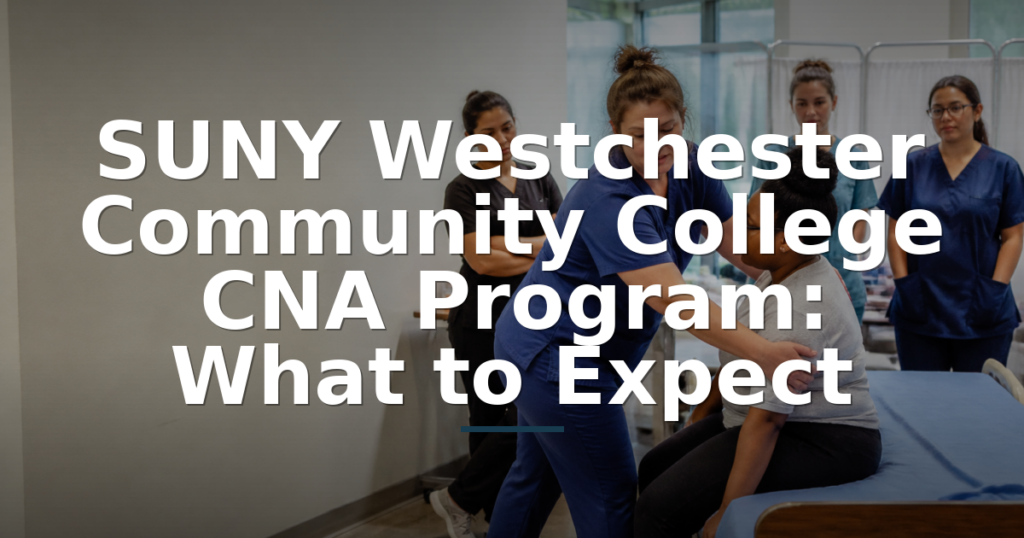
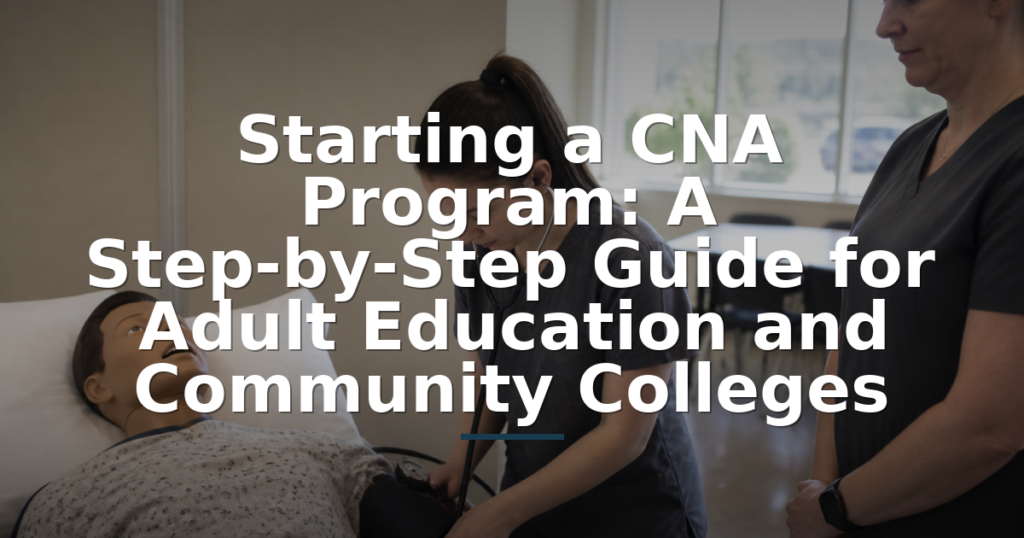
These programs are short, typically a few weeks to a few months, and built around the state-approved nurse aide curriculum. Most run in cohorts with a set start date rather than open enrollment, so plan around the next class instead of signing up whenever you are ready. United Way Suncoast's graduating group, for example, was a small cohort that finished together.
Ask whether the program publishes its all-in cost, including the state exam fee. Some programs cover tuition but leave you to pay for books, uniforms, background checks, or the certification test. A program that spells out exactly what is covered and what is not has usually thought through the student experience.
WIOA can cover up to 100% of eligible CNA costs, including tuition, books, uniforms, supplies and exam fees. That is one of four funding streams behind free seats, and most programs blend more than one.
Dwyer Workforce Development in Baltimore County, Maryland, shows the intermediary model. Its CNA I/II track (140 hours, leading to CNA and GNA credentials) carries no tuition. Dwyer also provides case management, mentorship, transportation help, continuing education support and job placement after graduation. Applicants must be 18 or older, pass a background check, meet the COVID-19 vaccination requirement and complete an intake interview.
Most grants are tied to completion and placement outcomes. That explains the strict attendance policies and the job-placement help built into these programs. The funder is paying for graduates who certify and get hired, so the program is designed to get you there.
Seats depend on grant cycles. A program that was free last year may not be enrolling this year, and cohorts can open and close with little notice. Confirm current funding before you plan around a start date.
Also watch for mismatch. A hospital-funded program may steer graduates toward the sponsor's own openings. That is a fine deal if you want to work there. If you want a different setting, ask about it up front.
United Way Suncoast's Certified Nursing Assistant program covers tuition, books, and state exam fees for participants. According to United Way's profile of graduate Destiny Majurie (https://www.unitedway.org/news/destinys-path-from-patient-to-caregiver), Destiny finished alongside seven classmates, and the group was celebrated at Sunshine Health's Sulphur Springs location.
The program splits its support by stage. Positive Spin works with students during training to identify barriers and build education and career plans. After graduation, Dwyer Workforce Development takes over with mentorship, transportation assistance, continuing education support, skill-building, and job placement.
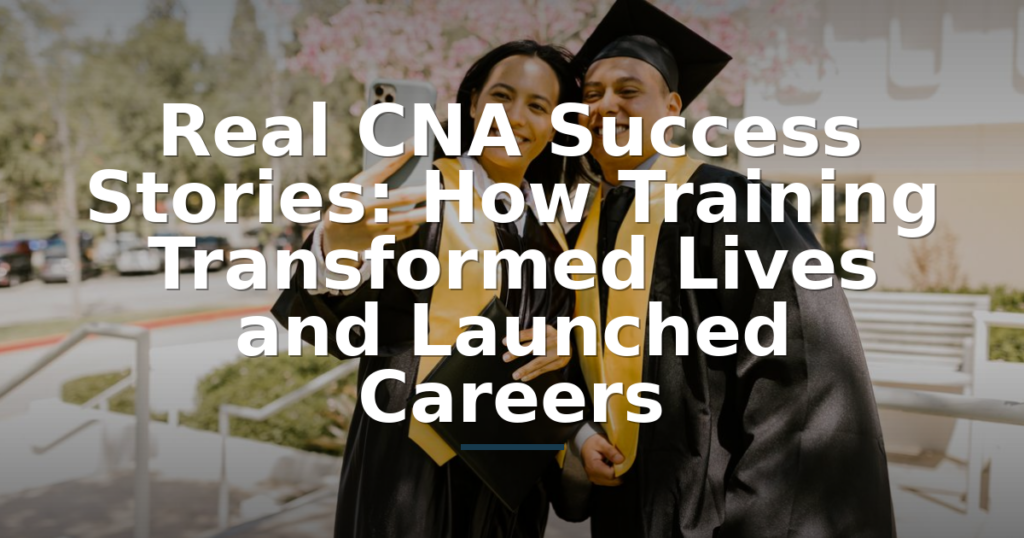
The cohorts are not made up of one type of student. Destiny entered at 19, after first imagining a career in teaching and then deciding to model herself on the nurses who cared for her through years of sickle cell anemia. Pamela Bready, an Army veteran, former paratrooper, and cancer survivor, earned the credential at 59 as a career change. Prior health care experience was not the entry ticket for either woman.
Destiny passed the state certification test and was hired at St. Joseph's Children's Hospital in Tampa, working in the pediatric ward. One of her own nurses, Emily Taft, is also a Suncoast CNA graduate and is continuing her education to become a registered nurse.
The program's page lists the steps in a set order:
The page lists session dates of November 13 and May 22 but gives no years, so treat them as unconfirmed. It also does not state an enrollment window, a cohort start date, or other documents such as immunization records. Contact United Way Suncoast directly to confirm the next session, the reimbursement timing, and what happens if a screening needs to be repeated.
Eligibility for nonprofit CNA training is set by your state and by each program, so verify the rules yourself before you apply. No uniform national standard exists for residency, income screens, background checks, or exam-fee payment.
Begin with your state nurse aide registry or state health department. Confirm which agency handles CNA certification where you live, then look for the official rules on age, residency, background checks, clinical-hour timing, and exam fees. The details vary widely. The federal baseline is at least 75 training hours, including 16 supervised practical hours, but Alaska requires 140 and California 150. Tennessee sets a minimum age of 18, while other states allow 16 and 17 year olds under conditions.
Federal rules also protect you on cost. If you are employed by, or have a job offer from, a nursing facility when training begins, you cannot be charged for training, materials, or the competency exam. That does not mean every nonprofit covers every candidate's exam fee, so ask.
Check the program's own website, then call admissions. Ask about:
For national requirements and occupation context, see BLS.gov. State nurse aide associations and national direct-care workforce groups can also give plain-language guidance and point you to local training.
If the program's answers and the state's answers disagree, trust the state and keep asking.
Most nonprofit CNA programs follow the same five-stage path, and the main difference from paid training is who covers each stage. United Way Suncoast's model below shows where the program and its partners pay and where your time and effort come in. Use it as a checklist when you compare local options.

A few named nonprofit programs do report outcomes. San Francisco Campus for Jewish Living's Campus Nursing Academy in California reported a 100% pass rate on the state written and clinical exams for its most recent class of 17, with 52 graduates certified since April 2026. Lunder CareForce Institute at Hebrew SeniorLife in Massachusetts reported 91% completion against an 80% goal, and 84% on the state competency exam against a 75% goal. Nurse.org has described American Red Cross CNA sites graduating about 90% of students and passing above 80%, though without naming a state or year. Northwest Iowa Community College says its graduates pass at exceptional rates but does not publish a figure; it lists starting pay of $13.72 to $20 an hour with credit for experience.
Placement data is the hardest figure to come by. San Francisco's program notes that 18 of its first 34 graduates work at the sponsoring campus, which is an employment count, not a placement rate. Lunder set a 75% placement goal (certified and employed in a health care facility within 90 days) but has not published actual results. There are reasons for the silence: cohorts are small, grant reporting stays private, and no provider volunteers a weak number.
When a program does publish a pass rate, set it against your own state's published nurse aide pass rate rather than against a neighboring school. Statewide figures are the fairest benchmark, because every program's students sit the same exam.
CNA wages are entry-level by design. National starting ranges run roughly $18 to $22 an hour depending on region and setting. The credential earns its keep when it becomes the first rung toward LPN or RN.
Based on 2025 Occupational Employment and Wage Statistics from the U.S. Bureau of Labor Statistics, nursing assistants earn a median of about $42,260 a year, and the middle half of workers fall roughly between $37,260 and $47,220. The field employs about 1.45 million nursing assistants, and the broader care-aide group, which also includes home health and personal care aides, orderlies, and psychiatric aides, employs about 5.8 million people at a lower median of about $37,070. These are approximate national figures, and pay varies sharply by state, by setting (nursing home, hospital, or home health), and by shift, so check local job postings before you build a budget.
| Occupation (BLS, 2025) | Total U.S. Employment | 25th Percentile Annual Wage | Median Annual Wage | 75th Percentile Annual Wage | Mean Annual Wage |
|---|---|---|---|---|---|
| Nursing Assistants | 1,448,910 | $37,260 | $42,260 | $47,220 | $42,700 |
| Nursing Assistants, Orderlies, and Psychiatric Aides | 1,536,870 | $37,210 | $41,970 | $47,230 | $42,700 |
| Home Health and Personal Care Aides; and Nursing Assistants, Orderlies, and Psychiatric Aides (combined group) | 5,842,680 | $34,320 | $37,070 | $42,770 | $37,850 |
A CNA program's own published results tell you far more than whether it is nonprofit or for-profit. Both types train you for the same job and the same state certification exam, and national data do not show that employers pay or hire differently based on who ran your training. What does differ is cost, support, and track record, all three of which you can check yourself.
Before you trust any program's salary promise, look up nursing assistants on BLS.gov. The Occupational Outlook Handbook covers duties and job outlook. The Occupational Employment and Wage Statistics data show median pay.
For 2025, BLS reported a national median of $41,870 a year ($20.13 an hour) for nursing assistants.1 It projects 3% job growth from 2025 to 2035.1 Pay also varies by employer type. Nursing care facilities ($43,000) and hospitals ($42,310) sat above home healthcare services ($38,040). If a school quotes earnings well above these figures, ask where its number came from.
Request these in writing, then line them up side by side:
Next, confirm that your state's nurse aide training authority has approved the program. Approval status is often published alongside the state nurse aide registry. Without state approval, you may not be eligible to take the exam. If a school claims accreditation, verify it with the accrediting body directly.
Call two or three local nursing homes or hospitals and ask which programs their recent hires completed. Then browse job postings in your area. Most list an active state certification as the requirement, not a particular school. Professional associations for nursing assistants and long-term care can also tell you which local programs have strong reputations.
Free tuition covers the biggest bill, but transportation, barriers outside the classroom, and a plan for what comes after certification often decide whether a student actually finishes and gets hired.
A practical nursing program typically runs about 12 months, and CNA-oriented LPN tracks often take 9 to 12 months full time or 15 to 20 months part time. One New England Institute of Technology pathway lists 15 months. The RN route is longer: an associate degree usually takes about two years once prerequisites such as anatomy and physiology, microbiology, English composition, and psychology are done. A BSN runs about four years.
A CNA credential is usually an admission requirement for CNA-to-LPN tracks, and some programs also ask for 6 to 12 months of paid CNA work, a 2.5 GPA, a TEAS or HESI A2 score, and a background check. Those patient-care hours strengthen an application and build clinical confidence. They do not usually convert to academic credit. Herzing University, for example, reportedly has CNAs complete its full 12-month program. Some schools do grant advanced placement that can trim 4 to 9 months, but that is school-specific, so ask before you assume it.
No national CNA-to-RN bridge license exists. A CNA applies to an ADN or BSN program like any other applicant, and everyone must still pass the NCLEX-PN or NCLEX-RN. An alternative is CNA to LPN, then an LPN-to-RN bridge of roughly 12 to 18 months. That gets you earning as a nurse sooner, though it is not necessarily faster overall than a direct ADN.
Start with the funding model behind your CNA program. Some nonprofit intermediaries support education after graduation. In the United Way Suncoast model, Dwyer Workforce Development offers continuing education support along with mentorship and job placement, and one graduate-nurse in that network is now working toward her RN. Ask any nonprofit program whether its post-graduation help extends to LPN or RN coursework.
The employer route is the other option. Many hospitals offer tuition assistance or bridge programs that fund LPN or RN classes in exchange for a work commitment. Terms vary, so get the repayment rules in writing from HR before you sign.
BLS projects employment of nursing assistants and orderlies to grow about 3 percent from 2025 to 2035.1 That is a projection, not a guarantee, and it is modest. Moving up the ladder widens your options.
For many CNAs, licensed practical nursing is a common next step, and pay rises with each rung.
Where do you actually sign up for a free CNA class run by a nonprofit? Start with your local United Way, but go in with a precise question.
Call or email the affiliate and ask: "Do you run or fund a CNA cohort, and who is the training provider?" That wording matters because many affiliates fund partner organizations rather than teach classes themselves. United Way Worldwide says local United Ways offer licenses, certifications, and vocational training in general, so the answer varies by community.
The clearest example in the sources we reviewed is United Way Suncoast in Florida. Its CNA program covers tuition, books, and state exam fees, and it works with workforce partners Positive Spin and Dwyer Workforce Development. We could not confirm which partner handles classroom instruction, or whether a cohort is open right now in late 2026. Contact Suncoast directly for current dates. Do the same with any other affiliate, since we found no verified list of other affiliates offering CNA training.
Other nonprofit and public-sector groups fund this training too. Check these:
Confirm the program appears on your state nurse aide registry's approved list. Most states publish it through the health department or nursing board. If the course is not approved, your hours may not qualify you to sit for the state exam, and that undermines the certification itself.
A solid program answers all four plainly. If the answers stay vague, move on to the next option.