Key Points
- Woonsocket Education Center opened an 840-square-foot CNA lab in 2026.
- Two CCRI cohorts totaling 33 students train in a 13-week state-approved program.
- CNA job openings reach about 203,300 per year through 2035.

We rank online CNA schools by lab quality, clinical hours, cost, and graduate outcomes.

Finding CNA programs near me with strong hands-on training often means weighing convenience against the quality of lab time you actually receive. That tension matters more now as new facilities expand access. In August 2026, the Woonsocket Education Center in Rhode Island opened an 840-square-foot nursing education lab equipped with patient manikins, hospital beds, and vital-sign instruments, enrolling 33 students across two 13-week cohorts. Openings like this reflect a broader pattern: with roughly 203,300 CNA positions projected to open each year through 2035, training programs are investing in simulation labs to keep pace with employer demand. For students balancing work or family obligations, fully online CNA certification programs that partner with local lab sites offer a practical middle ground, though state approval and actual lab hours vary widely.
These three CNA programs pair online coursework with required hands-on labs and clinical rotations, so you can study remotely without skipping the skills practice employers expect. Each school below is ranked based on institutional quality, with a focus on first-year retention and net price after aid. Use the program bullets to compare lab access, clinical sites, and scheduling before you apply.
Maysville, KY · $5,000/yr
Best for: Ohio border residents seeking tuition reciprocity
Maysville Community and Technical College offers a Medicaid Nurse Aide certificate that combines theory with hands-on lab and clinical preparation in as few as 3 to 6 credits. The program includes Nursing Assistant Skills I, Advanced Nursing Assistant, and clinical coursework, with online flexibility for learners balancing work or family. Regional clinical sites and Kentucky-Ohio tuition reciprocity make it a practical choice for border-area students.
Durham, NC · $2,000/yr
Best for: Students wanting Duke Health clinical exposure
Durham Technical Community College's Nurse Aide Certificate is a short-term pathway with online and campus options and an estimated tuition around $1,122. Classroom instruction, skills lab, and clinical rotations in Durham or Orange County build readiness for the NC Nurse Aide Competency Evaluation. A formal Duke Health partnership brings experienced nurse faculty and simulation resources into the program.
Omaha, NE · $15,000 – $20,000/yr
Best for: Working adults needing evening and Saturday labs
Clarkson College offers CNA courses with online theory paired with mandatory in-person lab and clinical experiences in the Omaha metro. Students practice in a dedicated simulation and skills lab before completing clinical rotations at long-term care facilities. Year-round monthly start dates and Nebraska Medicine sponsorship options support working adults entering the field.
To keep the CNA program rankings practical, we focused on four verifiable factors: fully online classroom delivery with no required on-campus lectures, published tuition and fees, institution-wide graduation rates, and earnings data from the federal College Scorecard where available. Programs described as hybrid or requiring regular in-person class sessions were not treated as fully online, even if the CNA skills lab portion happens at a local lab. Cost was reviewed as published total tuition and fees before financial aid, not as a promise of your final out-of-pocket price after grants or employer support.
Lab quality and simulation technology change quickly and vary by location, so we did not assign a single facility score from internal data alone. A newer lab may not be the best fit for your commute, schedule, or learning style. For a room-by-room facility checklist, see the lab benchmarks section.
Graduation rates are institution-wide, not program-specific. A college with strong overall outcomes may have a CNA cohort with different results. Earnings data also reflects students from all programs at the institution, so treat it as a general signal of post-college earnings rather than a promise for one credential. Use the published rate as a starting point, then ask the program for CNA exam pass rates, employer placement, and average time to certification during your interview.
Even though overall CNA employment growth is projected at about 3% from 2025 to 2035, the Bureau of Labor Statistics estimates roughly 203,300 openings per year for nursing assistants and orderlies over that decade. Most of those openings come from turnover and retirements, meaning steady demand for newly trained CNAs across the country.
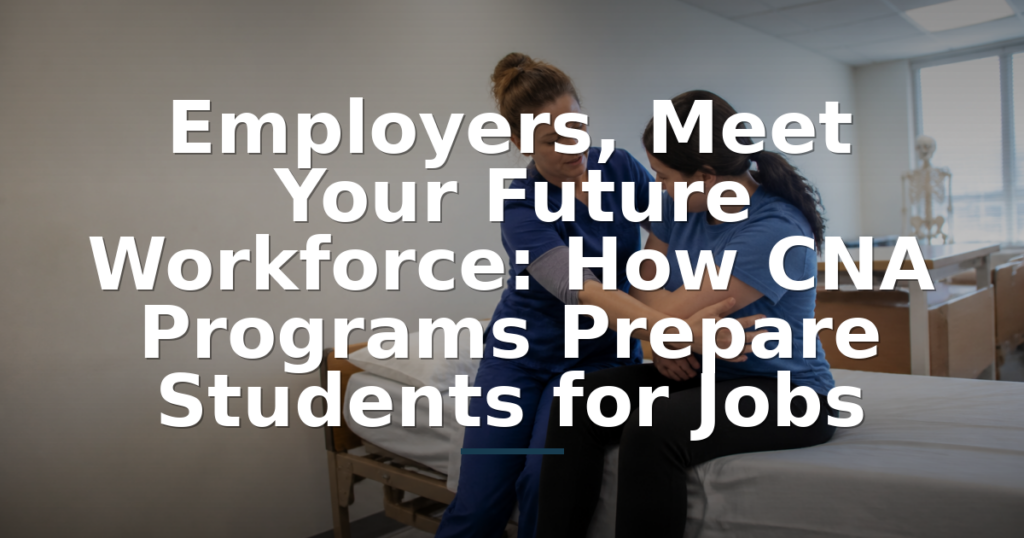
Strong CNA programs build repetition into small-group labs, not just lectures. The Woonsocket Education Center's new 840-square-foot nursing lab in Rhode Island shows what modern hands-on training looks like: manikins, hospital beds, wheelchairs, commodes, and vital-sign tools in one space. These benchmarks help you compare programs before you enroll.

Sticker price rarely tells you what a CNA program actually costs, and the gap between the two can decide whether training fits your budget.
Posted tuition is only the starting line. Programs across the country show total costs ranging from roughly $850 to $3,400 once every required item is added in. Community and technical colleges often list a lower base tuition, then charge separately for books, uniforms, background checks, drug screens, immunizations, and the state competency exam fee. Private schools tend to bundle more of those items into one number, which is why their sticker price looks higher even when the actual cost to you ends up similar.
Before enrolling, ask a program to itemize:
The number on a school's website is the sticker price. Your net price is what remains after grants, scholarships, employer contributions, or workforce funding are applied. Two programs with identical listed tuition can have wildly different net prices depending on what aid is available in your area. Always ask a program directly what students typically pay after aid, not just what the catalog states, since that gap is where affordable training actually lives.
Many long-term care facilities and hospitals offer paid CNA training upfront or reimburse it after you pass your exam and complete a probationary period, usually in exchange for a commitment to work there for a set stretch, often around a year. Repayment clauses if you leave early are common, so read the agreement carefully.
On the public side, Workforce Innovation and Opportunity Act (WIOA) funding, run through local workforce boards, can cover tuition and, in many regions, books, uniforms, background checks, and exam fees through CNA training grants for eligible students. Coverage varies by board, so check with your local one-stop career center before assuming full coverage.
A real-world version of this played out in Rhode Island in 2026. The Rhode Island Department of Labor and Training committed $200,377 in grants to support CNA programming at the newly expanded training lab at the Woonsocket Education Center, helping fund two full cohorts of students in a state-approved, 13-week program.1 It is a clear example of how state workforce dollars can turn a several-hundred-dollar training cost into little or nothing out of pocket for the right applicant.
Program-level earnings data for CNA graduates is not yet reported in federal datasets, so this section focuses on state exam pass rates, which are more consistently available. National first-time pass rates typically fall between 70% and 87%, with overall rates commonly ranging from 80% to 85%. The chart compares written and skills pass rates from Florida, Arizona, and one California program. Keep in mind that reporting methods vary by state and exam vendor, so direct comparisons between programs are not always apples-to-apples. Because job placement rates are not systematically collected, ask any program separately for completion, pass, and placement outcomes.

Are new CNA training labs actually opening near you, or are schools just running the same schedule with a new date stamped on it? Both things are happening in 2026, and knowing the difference helps you spot real capacity versus a repackaged cohort.
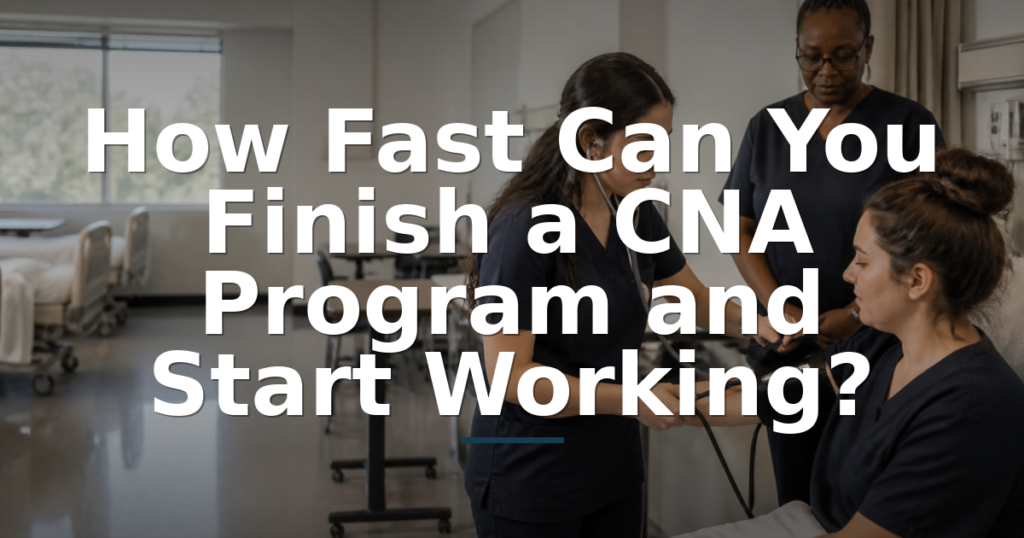
In August 2026, the Woonsocket Education Center nursing lab celebrated its opening at 840 square feet, built with capital funding from the Champlin Foundation and CNA programming support from the Rhode Island Department of Labor and Training totaling $200,377 in grants. Two Community College of Rhode Island cohorts, 33 participants total, are moving through the 13-week, state-approved program using simulated patient manikins, hospital-style beds, wheelchairs, privacy dividers, and CNA clinical skills tools like stethoscopes and blood-pressure cuffs. That is a textbook example of what new capacity looks like: fresh equipment, state money, and seats that did not exist before.
Elsewhere, the pattern is less about new construction and more about expanded scheduling. East Valley Nursing Academy in Mesa, Arizona ran a skills lab session in the summer of 2026, and Logan Health in Montana opened applications for a hospital sponsored CNA training program with training starting in November.1 These are not brand-new buildings, but they still represent employers and schools putting real money and staff time into hands-on training pipelines. Treat any single report cautiously since verified new-lab announcements are less common than repeated cohort listings.
When a region adds lab space or funds new cohorts, it usually signals that local employers cannot fill CNA openings fast enough. State grants and employer-sponsored seats often mean lower or no out-of-pocket tuition for you. If you see a program announcing new equipment, added cohorts, or fresh funding, that is a reasonable signal that hiring demand nearby is real, not just marketing.
Before you enroll, confirm state approval in writing. Completing an unapproved program can keep you from taking the CNA competency exam and getting on the state nurse aide registry.
Choosing a CNA program means finding one that meets state requirements, offers Flexible CNA Class Schedules, and actually prepares you for bedside care. Even when the classroom portion happens online, certification requires in-person skills training and clinical hours. The program you select should coordinate both components so you graduate ready to pass your state exam.
Before comparing features, confirm the program holds approval from your state health department. As the state approval checklist explains, unapproved programs cannot lead to certification. Ask for documentation if approval status is not clearly posted.
Quality hands-on training depends on adequate time with equipment and direct supervision. Review the earlier section on what makes a strong training lab, then ask each program:
Programs with smaller class sizes and well-equipped facilities, like the new lab at Woonsocket Education Center, give you more practice time and individualized feedback.
Total cost varies significantly between programs. Use the cost worksheet approach described earlier to get a complete picture. Ask whether financial aid, employer sponsorship, or government-funded options are available. Some state workforce programs cover tuition entirely.
Strong programs publish CNA graduation rates and job placement figures. If a program cannot share these numbers, consider that a warning sign. Also confirm how clinical placements work: does the school arrange them, or are you responsible for finding a site? Programs that partner with local healthcare facilities often have smoother placement processes.
Fully online didactic instruction still requires in-person labs and clinicals for certification. Make sure the program explicitly arranges or approves both components rather than leaving you to piece things together after enrollment.
A quality CNA program will tell you exactly how many lab hours you'll get and what the student to instructor ratio looks like before you enroll. If a school won't share those numbers, that's your answer.