Key Points
- Finger Lakes Health CNA training is paid and New York State DOH-approved.
- Students complete 138 hours over four weeks, then sit for state exams.
- New CNAs can earn a $2,000 hiring bonus and transport help.

Learn how Finger Lakes Health’s paid CNA program leads to certification and hospital jobs.

Hospital employers increasingly treat CNA training as a workforce investment. Finger Lakes Health makes that concrete: a paid, New York State Department of Health-approved program delivering 138 hours of classroom, CNA training labs, and clinical instruction over four weeks.
Graduates can sit for state certification and may receive a $2,000 hiring bonus; Geneva trainees working at The Homestead or Huntington Living Center can get transportation assistance.
That employer-funded timeline shifts the math against a tuition-charging community college course, with LPN and RN advancement, via CNA to RN programs, as the next step.
Finger Lakes Health's CNA program is a paid, New York State Department of Health-approved hospital sponsored CNA training pathway that moves students from classroom instruction to certification readiness in one month. That combination of employer funding and state oversight removes two common barriers for aspiring CNAs: tuition cost and uncertain clinical placements. Rather than paying tuition while you source your own clinical hours, you train as an employee and earn a paycheck during training.
The program packs 138 hours of classroom, laboratory, and clinical instruction into four weeks, held Monday through Friday, a fast track CNA certification format. The Monday through Friday schedule mirrors a full-time workweek, so students can plan childcare, transportation, and other commitments around a predictable routine. That full-week format is ideal for motivated students who want to finish training quickly and enter the workforce, rather than spreading coursework across a traditional semester.
After completing the 138 hours, graduates are eligible to sit for the New York State certification exam. Once certified, you can pursue CNA roles at Finger Lakes Health facilities including Geneva Living Centers, The Homestead in Penn Yan, and Huntington Living Center in Waterloo. Because the program is run by the health system itself, many students treat it as a direct on-ramp to employment, with hiring incentives and transportation support available for certain positions.
Some CNA training programs spread classroom time across a full term; Finger Lakes Health front-loads the same fundamentals into four consecutive weeks. The total is 138 hours, built from three delivery formats: classroom instruction, CNA skills lab, and supervised clinical practice. Students should budget for full-day commitments during those four weeks, since the schedule runs Monday through Friday.
Finger Lakes Health does not publish a separate hour count for each component. The program framework is described as classroom, laboratory, and clinical instruction, so students should expect all three to be integrated across the Monday-through-Friday daytime schedule.
Regardless of the exact hour split, the CNA training curriculum is designed around core nursing assistant competencies:
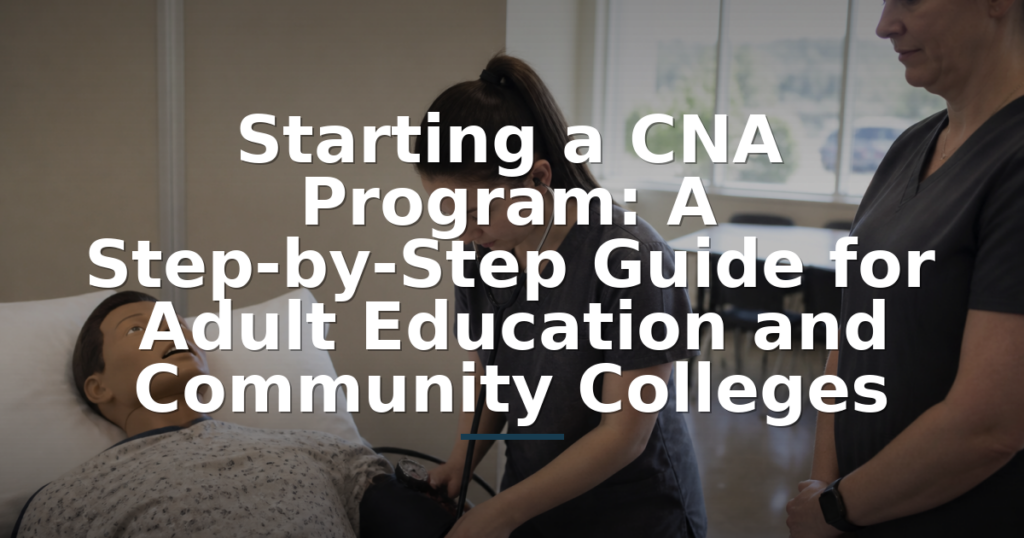
Clinical time takes place in Finger Lakes Health facilities, which gives students direct exposure to real skilled-nursing units rather than simulation alone. For many students, this is the first time they apply classroom techniques on a real unit, under instructor supervision.
Current Finger Lakes Health program pages do not describe the CNA program as online or hybrid, and they do not list technology requirements. A separate job posting has described a hybrid trainee format in the past,1 but that should not be treated as confirmed for the current class. If you are considering a future cohort, ask the program directly whether any online modules are currently required and what device or internet access is needed.
Nursing assistants in New York earn a median annual wage of $48,590, based on 2025 BLS data.
A paid CNA program flips the usual decision: instead of paying tuition and waiting to see whether you land a job, you are hired as an employee first and collect a paycheck during the four-week employer sponsored CNA training class. Finger Lakes Health describes the training as a paid program, and current training wage information lists $20.00 per hour while enrolled in the 138-hour course. That wage applies to the Geneva, Penn Yan, and Waterloo training pathway, but you should confirm the rate for your specific class because systemwide 2026 location coverage is not always published.
Because this is an employee-first model, there is no separate tuition charge in official program materials. Finger Lakes Health does not list registration fees, textbook costs, uniform charges, or a separate course-material fee. The New York State certification exam is required after completion, but the official pages do not state who pays the exam fee. Background checks, drug screens, physicals, immunizations, CPR, scrubs, footwear, meals, parking, and other incidental costs are also not specified in available materials. In plain terms: paid training and no tuition are clear; full cost-free coverage is not established for every possible out-of-pocket expense.
After successful completion and certification, CNAs move into positions at Finger Lakes Health long-term-care facilities. 2026 job postings show a range rather than one systemwide CNA salary. Penn Yan CNA openings list $21.12 to $24.27 per hour, Waterloo openings list $21.12 to $25.24 per hour, and one training listing shows $21.12 to $29.00 per hour based on prior experience. These are job board figures, so treat them as current posted ranges, not an official universal starting wage.
Finger Lakes Health is offering new CNAs a $2,000 hiring bonus. Some current job postings advertise a $3,000 incentive for certain openings, so the bonus can vary by facility or posting date; ask HR which amount applies to your offer. Trainees who attend Geneva training and then work at The Homestead in Penn Yan may qualify for $125 per week in transportation assistance, while those working at Huntington Living Center in Waterloo may qualify for $75 per week.
You earn while you learn, finish in four weeks, become eligible for state certification, and walk into a job with a hiring bonus and transportation support.
A side-by-side comparison of CNA training programs in the Finger Lakes really comes down to two different models: one pays you to learn, and the other charges tuition for the same state certification. Finger Lakes Health runs a paid, hospital-based program, while Finger Lakes Community College offers a workforce-focused college pathway.
Finger Lakes Health operates like an earn-while-you-learn pipeline: you are already an employee during training, and completion can lead directly toward CNA work at one of its facilities. FLCC does not guarantee employment, though its graduates take the same New York State certification exam. If income during training and a direct job offer matter most, FLH is the stronger fit. If you want a college setting and may qualify for workforce funding, FLCC is worth exploring.