Key Points
- SUNY WCC CNA tuition is $1,977 plus textbook and workbook.
- Clinical partners include Bethel, Tarrytown, and Cabrini nursing homes.
- BLS projects about 203,300 nursing assistant openings yearly from 2025 to 2035.

A practical guide to coursework, clinicals, actual costs, and comparing local CNA options.

Where do you train for a nursing assistant job when the U.S. Bureau of Labor Statistics projects about 203,300 openings every year from 2025 to 2035? SUNY Westchester Community College (SUNY WCC) answers with a hands-on model: classroom instruction, practical skills training, and CNA clinical hours requirements met in nursing homes.
Tuition is $1,977, plus a textbook and workbook, and the catalog lists one Saturday section at its Ossining location. That is a small outlay next to a nursing degree, but the CNA vs ADN choice still has to be weighed against the schedule and the added costs.
Most of those openings come from retirements and turnover, not new positions, so the real question is which program gets you hired.
The question most applicants have is about CNA program length, and SUNY Westchester Community College (SUNY WCC) has not published an exact hour count or week count in the sources we reviewed, though its catalog does list a 2026 Saturday section. What the college does confirm is the shape of the training: a New York State-approved Certified Nursing Assistant program that pairs classroom instruction with clinical experience at a local nursing home. Use CNA training hours by state to set expectations, then confirm the specifics with the college before you register.
New York's minimum for state-approved nursing-home nurse aide training is 100 hours. That breaks down as follows:
The federal baseline is lower, at 75 total hours (59 classroom, 16 clinical), so New York asks for more. One caveat: some sources say New York adult nurse aide programs commonly run 120 hours. We could not confirm which figure applies to SUNY WCC's 2026 program, so ask the college for its exact total and split.
Expect three layers, each building on the one before it.
New York CNA programs generally run about 4 to 12 weeks, but that range describes the state as a whole, not SUNY WCC specifically. The college has confirmed a Saturday section of weekend CNA programs for 2026, but it has not confirmed additional day or evening sections. If you work or have childcare duties, that detail matters as much as tuition. Ask which days the classroom portion meets and whether clinical shifts fall on weekdays, since nursing home placements often follow facility hours rather than your preferences.
The U.S. Bureau of Labor Statistics projects about 203,300 openings for nursing assistants each year from 2025 to 2035. Most of those aren't from new positions but from workers retiring or leaving the field, so demand for trained CNAs stays steady year after year.
SUNY Westchester Community College runs several sites, and that can make it hard to tell where CNA classes actually meet. Here is what the current official listings show.
The CNA program is taught in person at SUNY Westchester Ossining, an extension center. Registration goes through that office at 914-606-7400 or [email protected].
The other locations are real SUNY WCC sites, but current CNA listings do not place the program at any of them:
These centers are all part of one college, not separate schools. If a friend or a web page mentions a different campus, call Ossining to confirm before you plan a commute.
The catalog lists an Ossining summer CNA training program that meets Saturdays, May 30 through September 19, 2026, from 9:00 am to 4:00 pm. The Ossining listing also gives an application due date of May 16. The sources do not make clear whether that date belongs to the Saturday cohort, another 2026 section, or an earlier cycle, so ask the office directly. I found no later 2026 start date or separate deadline, so by late October you may be looking at the next cycle. Ask when it opens.
One more caution on price. The 2026 healthcare listing shows $1,977 plus a textbook and workbook. A separate catalog entry shows $2,291 with the same extras. Confirm which amount applies to your section when you register and review cna financial aid options.
SUNY WCC's extension centers generally offer days, evenings, and weekends, and their courses may start a week after main-campus classes. That is a general statement about the centers, though, not a promise about CNA. The only CNA format documented for 2026 is the Saturday cohort. Official results do not confirm a weekday or evening CNA section.
If you work during the week, the Saturday format may suit you. Plan on a full day, seven hours each weekend for about four months, and ask whether clinical sessions follow a different schedule.
The path into SUNY Westchester Community College's CNA program moves from application and interview to a set of clear, clinical-readiness steps. Here is what to prepare.
Clinical placement has quietly become the deciding factor for many CNA students weighing otherwise similar programs. SUNY Westchester Community College builds that factor into its CNA training by pairing classroom instruction with hands-on rotations in nursing homes, where students practice the skills employers actually expect on a first shift.
SUNY WCC names Bethel Nursing and Rehabilitation Center and Tarrytown Rehabilitation and Nursing Center as current clinical partners. Cabrini Nursing Home remains a clinical partner as well, although students have not completed clinical rotations there in the past year, according to Mark Stollar, the college's director of strategic marketing and communications1. This matters because a program's partner list tells you where you may be training, commuting, and potentially making a first impression for a job.
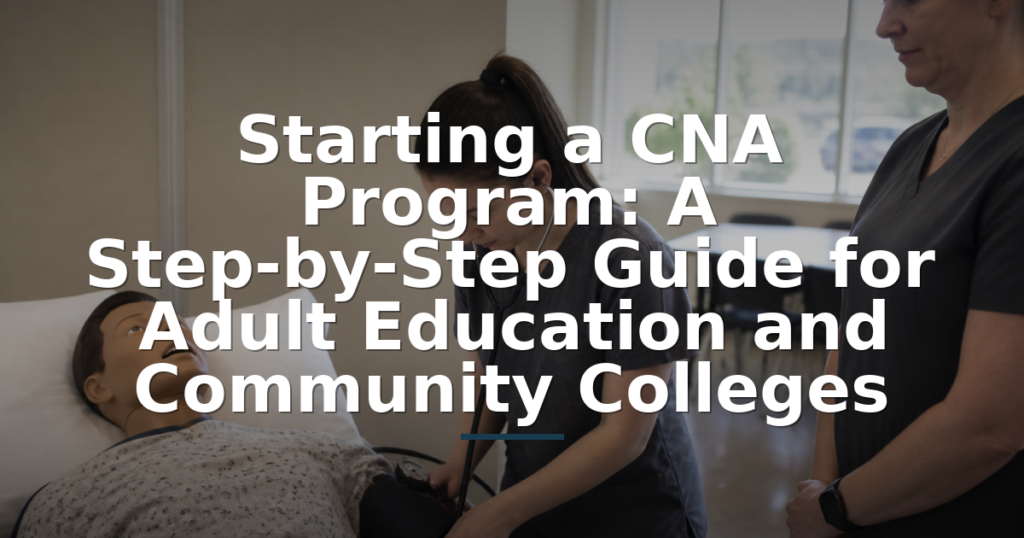
Clinical time at SUNY WCC is not observation only. Students apply their classroom training in a real nursing home setting, making the experience a working CNA clinical rotation. Typical CNA duties during these rotations include:
These are the core skills from the classroom put into practice with real patients, under supervision. For many students, this is the part of the program that builds confidence and confirms the career fit.
The clinical partners are only one piece. SUNY WCC also brings employer partner HR professionals into classes to discuss open roles, hiring processes, and what they look for in new CNAs. The college hosts job fairs and shares employer hiring-event information. That does not guarantee a job, but it shortens the distance between finishing the program and getting an interview. For students comparing programs, ask whether a school names its partners, explains what students do in clinicals, and has a visible pipeline to local employers. Those details reveal how CNA programs prepare students for jobs and how seriously the program treats the transition from student to employed CNA.
The published tuition for the SUNY Westchester Community College CNA program is $1,977, and students are also expected to purchase a textbook and workbook. Additional costs such as uniforms, the certification exam, a background check, a drug test, and a physical exam are not itemized in the public source, so budget for them separately. Financial aid may reduce out-of-pocket costs through SUNY WCC Foundation scholarships, which often cover tuition and fees, or the tuition-free SUNY Westchester Educational Opportunity Center pathway for qualified applicants; employer-sponsored training or reimbursement can also help, but availability varies by employer.
| Cost Item | Estimated Amount |
|---|---|
| Tuition | $1,977 |
| Textbook and workbook | N/A |
| Uniforms | N/A |
| Certification exam | N/A |
| Background check | N/A |
| Drug test | N/A |
| Physical exam | N/A |
CNA training has multiplied in recent years across hospitals, private academies, and community colleges, which makes knowing what separates the best CNA programs from mediocre ones more useful than ever. Price and length tell you only part of the story. The stronger signals are the quality of clinical placements, the real-world experience of the instructors, and whether the school actively connects graduates to employers.
When you compare options, weigh these four factors:
Against that framework, SUNY Westchester Community College holds up well. Its clinical rotations run in nursing home settings through partners including Bethel Nursing and Rehabilitation Center and Tarrytown Rehabilitation and Nursing Center, giving students hands-on practice with activities of daily living, infection control, and patient communication.
The instructors draw on professional backgrounds in both critical care and long-term care, so classroom lessons stay anchored in actual bedside situations.
The program's employer connection is one of its clearest strengths. HR professionals from partner employers visit classes to walk through open positions and the hiring process, and the college hosts job fairs while sharing information about employer hiring events. That direct line between students and hiring managers is exactly the kind of career support a strong program should offer, and it is worth asking about at any school you consider.
Use this checklist to compare community college CNA programs side by side. Look beyond tuition to clinical placement quality, instructor background, and employer connections. The SUNY Westchester Community College approach shows how these factors can fit together.
| Factor | What to Look For | WCC Approach |
|---|---|---|
| Total cost | Clear tuition plus any required books or materials. | Program tuition is $1,977, and students must also buy a textbook and workbook. |
| Clinical hours | Supervised rotations in real nursing home environments. | Students complete clinical hours in nursing home settings through partners including Bethel Nursing and Rehabilitation Center and Tarrytown Rehabilitation and Nursing Center. |
| Location and schedule | Accessible in-person sections that work for commuting learners. | In-person sections are offered at the Ossining location. |
| Instructor qualifications | Faculty with direct critical care or long-term care experience. | Instructors bring professional experience from critical care and long-term care settings into the classroom. |
| Employer connections | Exposure to hiring processes through employer visits and job fairs. | Employer partner HR professionals visit classes to discuss job openings and hiring, and the college shares hiring-event information. |
| Curriculum coverage | Training on daily care, safety, infection control, and communication. | Coursework includes bathing, dressing, feeding, safe movement, infection control, and communication skills. |
Nursing assistants in New York earn a median annual wage of $48,590, based on the latest federal wage data available in 2026.
Finishing a state-approved nurse aide program is only the first half of the CNA certification process in New York. New York requires a NYSED- or NYSDOH-approved program totaling at least 100 hours (70 in classroom and lab, 30 in supervised clinical work), and your training generally needs to fall within 24 months of the date you apply. Once you have completed it, these steps follow.
Passing both parts is not the finish line by itself. After that, Prometric issues your CNA certificate and enters you in the New York State Nurse Aide Registry, and you must be listed there to work. Unofficial estimates put processing at roughly 2 to 4 weeks, but no guaranteed timeline is published, so plan for some waiting.
The Prometric fee is $115 for the clinical plus written exam, and $135 if you choose the oral option with reading comprehension. Pay by certified check or money order only, since personal checks and cash are not accepted.
You have 24 months after training to pass both components, with three attempts at each. Retests cost $68 for clinical skills, $57 for the written exam, and $67 for the oral exam. Fail a component three times and you must retrain.
Certification is generally renewed every 24 months, and how to renew cna certification requires employer verification of at least 7 hours of paid nurse aide work in a healthcare facility during that period. The $40 recertification fee is paid by your employer. Aides with registry restrictions are not eligible to renew. If you go 24 consecutive months without paid nurse aide work, expect to retest, and some aides may have to retrain. Confirm current rules with Prometric before you let a gap develop.
The demand for nursing assistants stays steady nationwide, with 3% projected growth and about 203,300 average openings each year from 2025 to 2035. SUNY Westchester Community College keeps the path practical: a $1,977 program plus books, delivered through three in-person sections in Ossining.