Key Points
- Westwood Nursing Center pays CNAs approximately $18 per hour.
- Ogeechee Technical College offers the top-rated program for 2026.
- All CNA programs require in-person clinical skills training in Georgia.

Compare CNA programs in Statesboro, GA, find affordable training, and learn how to become certified.

Georgia’s over-65 population is projected to grow faster than the national average through 2030, and Bulloch County already feels the pressure. Nursing homes, assisted living facilities, and home health agencies in Statesboro compete for a limited pool of certified nursing assistants, giving new graduates real hiring leverage.
Entry is faster than most healthcare careers. A state-approved CNA program typically takes four to eight weeks, and local CNAs earn around $18 per hour. The main challenge isn’t motivation but logistics: finding a program with the right schedule, understanding certification costs, and knowing which employers hire new grads.
The shortage is structural, not cyclical. As long-term care expands to meet regional demand, the need for frontline caregivers will remain steady regardless of economic shifts.
At Westwood Nursing Center, CNAs earn around $18 per hour1, a figure that reflects the steady demand for skilled caregivers across Statesboro. The city's healthcare landscape is anchored by East Georgia Regional Medical Center, an acute-care hospital that regularly hires CNAs, alongside a robust network of nursing homes, rehabilitation centers, and home health agencies. This density of employers creates a reliable job market where newly certified nurse aides can choose from multiple settings.
Skilled nursing and rehabilitation facilities form the backbone of local CNA employment. Eagle Health & Rehabilitation offers wages between $16.80 and $18.35 per hour1, while Pleasantview Nursing Center2 and Brown's Health and Rehabilitation Center1 frequently post openings for all shifts. For those seeking per-diem flexibility, East Georgia Regional Medical Center also lists CNA staffing through Nursa3. Home health agencies like All Ways Caring HomeCare, Abide Home Care, and Grace Home Care Provider provide alternative pathways, with hourly rates ranging from $11 to $164, ideal for CNAs who prefer one-on-one patient care outside institutional walls.
State-approved CNA classes in Statesboro integrate clinical practice directly within these same facilities. Students complete hands-on rotations at hospitals, nursing homes, and assisted living centers, often building relationships that lead to job offers. While specific employer-sponsored tuition reimbursement programs are less common locally, many graduates transition seamlessly into roles at their clinical sites. The combination of training and employment proximity gives Statesboro students a practical head start, turning classroom skills into paycheck-ready competence.
Balancing flexibility with mandatory hands-on training is the central challenge for Statesboro students who want to complete some of their CNA coursework online. While remote learning can save time and travel, Georgia regulations require every program to include in-person skills labs and clinical hours, so no fully online path exists.
The Georgia Nurse Aide Registry mandates that all approved CNA training includes supervised clinical experience. You can study theory online, but you must demonstrate skills in person at an approved facility. This means any program marketed as "online" is actually a hybrid or blended format.
Many community and technical colleges offer hybrid CNA courses that deliver lectures virtually while scheduling labs and clinicals on campus. In Statesboro, Ogeechee Technical College provides a comprehensive Nurse Aide Certificate, but its current program is entirely campus-based. For a true hybrid option, you may need to look farther afield for CNA classes in Georgia. Providers like Georgia Training Center (Columbus)1, ECR of Georgia (Atlanta area)2, and Winder CNA Training (Watkinsville)3 run blended programs lasting four to six weeks. Before enrolling, confirm they have clinical placement agreements with healthcare facilities near Statesboro, or be prepared to travel.
Always check the Georgia Board of Nursing website or call the Nurse Aide Registry at (404) 232-1900 to confirm a program's approved status. Unapproved training will not qualify you to sit for the state competency exam. Look for schools that explicitly advertise "online theory," "blended," or "hybrid" delivery, and verify that their in-person requirements can be met locally.
Search for accredited CNA programs that partner with Statesboro-area nursing homes or hospitals for clinical placements. Even if a program's main campus is hours away, some schools coordinate clinical rotations at sites closer to your home. Always get written confirmation of clinical site locations before paying tuition.
Because hybrid options near Statesboro are limited, many students choose the established campus-based program at Ogeechee Tech or plan commutes to a blended course elsewhere. The key is to never sacrifice state approval for the sake of convenience.
Where can you actually attend CNA classes without relocating from Statesboro? Several accredited programs lie within an easy drive, each with its own schedule, cost, and admission process.
Ogeechee Technical College sits right in Statesboro and is often the first stop for local CNA training. As a public two-year college, it regularly offers nurse aide programs that blend classroom instruction with supervised clinical practice. Specific details, like program length, upcoming start dates, and cost, vary by term and are best confirmed directly with the admissions office. Because of its convenience and strong employer ties, spaces can fill quickly, so early inquiry is wise. In many cases, you may complete the entire program within a single semester, making it a fast route into the workforce.
Just under an hour southeast, Savannah Technical College delivers a structured Nurse Aide Technical Certificate of Credit, part of the CNA classes in Savannah, GA. The program runs for 7.5 weeks and prepares you for the state competency exam. Admission requires a high school diploma or GED, a criminal background check, drug screening, and up-to-date immunizations.1 Day and evening schedules may be available, though you should confirm current offerings. Tuition figures were not detailed in our data, but Georgia’s technical college system generally keeps costs affordable, often under $1,000 for in-state students. Contact the Savannah campus directly for exact enrollment dates and financial aid opportunities.
If you’re open to a slightly longer drive, Southeastern Technical College operates campuses in Swainsboro and Vidalia, each roughly 30 to 40 miles from Statesboro, and frequently runs CNA cohorts. Nearby Metter (less than 20 miles away) lacks a dedicated technical college, but many residents commute to Statesboro or Swainsboro for training. Farther out, Augusta Technical College (about 80 miles) offers CNA classes in Augusta, GA, though the drive makes it less practical for daily attendance. Always verify current offerings, schedules, and admission deadlines on each school’s website, as programs can change.
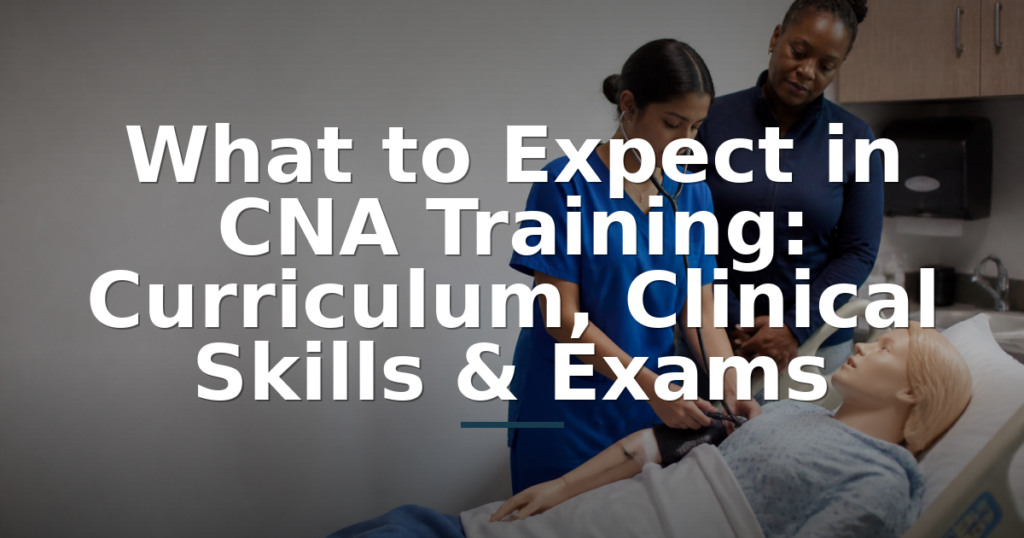
In-person CNA programs in Georgia blend classroom theory with extensive hands-on labs and clinical rotations at nursing homes or hospitals. You’ll learn patient care skills, infection control, and vital sign monitoring under direct supervision. Most programs move quickly, so consistent attendance is essential. The state mandates at least 85 hours of training, though many programs exceed this minimum. After finishing, you’ll be eligible to sit for the Georgia Nurse Aide Competency Exam. Because clinical placement slots are limited, programs often cap enrollment, leading to waitlists. Applying early and staying flexible with your schedule can help you secure a spot.
A CNA salary in Statesboro is the hourly or annual pay a certified nursing assistant earns for hands-on patient care work in hospitals, nursing homes, home health, and assisted living settings around Bulloch County. Because Statesboro is a smaller metro area, the Bureau of Labor Statistics does not publish a dedicated wage figure for local nursing assistants1, so the most reliable way to set expectations is to combine national benchmarks with what local employers typically offer.
According to the most recent BLS Occupational Employment and Wage Statistics, nursing assistants nationwide earn a median wage of about $38,200 per year, or roughly $18.36 per hour1. The mean is slightly higher at around $39,610 annually1. Georgia wages generally sit modestly below the national median, a trend common across the Southeast that aligns with data on the highest paying CNA states. Pay in rural and small-metro areas like Statesboro tends to run a bit lower than in Atlanta, Savannah, or Augusta, where competition for staff pushes hourly rates up. Local candidates should expect starting hourly pay in the mid-teens, with room to grow through experience, shift differentials, and specialty settings.
Most CNAs in the Statesboro area are employed in one of a few core settings:
Nationally, BLS projects nursing assistant employment to grow about 2% between 2024 and 2034, with roughly 211,800 openings each year driven largely by turnover and retirements2. It remains the third-largest healthcare occupation in the country3. In Georgia, an aging population and steady demand from long-term care facilities suggest hiring in the Statesboro region will stay consistent, even if raw growth numbers look modest on paper.
The path to certification balances speed with compliance: rush through an unapproved program and you forfeit exam eligibility, but choose the right training and you can be working within weeks. Georgia's certification process is straightforward if you follow the state's sequence exactly.
Your first task is to enroll in a training program approved by the Georgia Department of Community Health. Only graduates of approved programs qualify to sit for the competency exam. Most programs near Statesboro require a minimum of 85 hours of instruction, split between classroom theory and supervised clinical practice in a nursing facility or hospital. Verify approval status directly with the program or check the state registry of approved training providers before you commit tuition dollars.
Programs typically require you to be at least 18 years old, hold a high school diploma or GED, and provide proof of immunizations (hepatitis B, MMR, varicella, Tdap, and annual flu vaccine). A criminal background check is mandatory. Felony convictions or certain misdemeanors may disqualify you from certification, so review Georgia's exclusion list early if you have any record.
Once you complete training, your program submits your eligibility to Pearson VUE, the testing vendor. You will schedule two parts of the CNA exam: a written (or oral) knowledge test covering 60 multiple-choice questions and a clinical skills evaluation where you perform five randomly selected nursing tasks in front of an examiner. Both parts must be passed within two years of program completion. The exam fee in 2026 is approximately $115. Most candidates near Statesboro test at a Pearson VUE site in Savannah or Vidalia.
After passing both exam components, Pearson VUE forwards your results to the Georgia Nurse Aide Registry. You must submit a registry application, pay a processing fee (around $25), and complete another background check. Once cleared, your name appears on the public registry and you are legally authorized to work as a CNA in Georgia.
Georgia requires renewal every 24 months. To remain active, you must document at least eight hours of paid nursing-assistant work during that period and complete any continuing education required by your employer. Missing the renewal window means restarting the entire certification process, so calendar reminders are essential.
CNA training costs vary depending on where you enroll, but the total picture always includes more than just tuition. Textbooks, uniforms, health screening, a background check, and the state licensing exam all add up, so building a realistic budget before you apply saves a lot of stress later.
Ogeechee Technical College is the closest accredited public option for most Statesboro students. The 13-credit program is priced at $100 per credit hour, with mandatory fees adding another $385. When you factor in books and supplies (around $400), uniforms ($100), a TB test ($70), a background check ($80), and a drug screen ($30), the total estimated cost comes to roughly $2,477 before you sit for the state exam.1 The Georgia CNA state exam itself carries a fee of $112,2 so plan for that as a final line item.
For context, Georgia technical college CNA programs generally fall in a $1,500 to $2,500 range, so Ogeechee's pricing is consistent with what you would find across the state system.2 Private training providers tend to run lower on tuition, typically between $800 and $1,500 total, but they may offer fewer financial aid pathways.2
Not everyone pays out of pocket. Several funding sources can reduce or eliminate your costs:
Tuition rates, fee schedules, and aid availability change from term to term. The figures here reflect the most recently published program information, but the safest step is to contact the admissions or financial aid office at any program you are considering. A five-minute phone call can confirm exactly what you will owe and what assistance might be available before you commit.
This ranking highlights CNA and nurse aide programs at Georgia technical colleges that Statesboro-area students often consider. The list emphasizes hands-on clinical training, state certification preparation, and affordable tuition through the Technical College System of Georgia.
Athens, GA · $3,000 – $6,000/yr (est.)
Best for: Career changers needing fast campus training
A top-rated option for students who want a fast, structured path to CNA certification. The 12-week campus program combines 135 hours of classroom work with 45 clinical hours and includes exam prep. Admission requires a high school diploma or GED, background and drug screenings, and certain health documentation. Funding through WIOA or NEGRC may cover eligible students' fees.
Americus, GA · ~$1,000/yr (est.)
Best for: Students wanting direct patient care focus
This technical certificate focuses on direct patient care and prepares students for the state nurse aide exam. The 13-credit curriculum includes clinical experience and covers medical terminology, nutrition, and patient care skills. Financial aid is available, and the program sits within Georgia's TCSG system. It is a solid choice for students who prefer a shorter, focused certificate.
Rome, GA · $5,000 – $10,000/yr (est.)
Best for: High school graduates starting healthcare careers
This campus-based program blends classroom, lab, and clinical training for entry-level CNA roles. It offers an accelerated certificate option and emphasizes patient care across hospitals, nursing homes, and home health settings. Academic advisors and instructor support help guide students through admissions and course selection. The program is part of the college's Nursing and Health Technologies division.
Valdosta, GA · under $5,000/yr (est.)
An accessible one-term certificate that does not require a high school diploma or GED for admission. Students gain clinical experience in hospitals and nursing facilities while preparing for the NNAAP exam. The HOPE Career Grant may reduce costs for eligible students. CPR certification, immunizations, a background check, and a drug screen are required before clinicals.
Waycross, GA · under $5,000/yr (est.)
A 13-credit technical certificate approved by the Georgia Medical Care Foundation. The campus-based program includes classroom instruction and clinical experiences in hospitals and nursing facilities. Students as young as 16 may apply, and a high school diploma is not required. Background checks and drug screening may apply for clinical placements.
Marietta, GA · $4,000 – $6,000/yr (est.)
This Health Sciences certificate prepares students for CNA roles through core courses in health care fundamentals and nurse aide skills. The campus-based format includes clinical components and may be eligible for the HOPE Career Grant. Academic advisement supports students through the certificate. The program sits within the college's School of Nursing.
Savannah, GA · $6,000/yr (est. net price)
A hands-on nurse aide program with a flexible two-semester track or an accelerated 7.5-week format. Students learn patient care skills and complete clinical rotations under supervision. The program meets Georgia's requirements for the state certification exam. HOPE Career Grant funding can help reduce tuition.
Waco, GA · $2,000/yr (est. net price)
This campus-based nurse aide program provides practical training for entry-level healthcare roles, with an emphasis on geriatric and long-term care. Students train under licensed nurses and can complete an accelerated certificate option. The curriculum supports certification and employment in settings like nursing homes, assisted living, and hospice. Multiple campus locations across Georgia offer access.
Vidalia, GA · $10,000 – $15,000/yr (est.)
An accelerated, state-approved nurse aide certificate that includes hands-on clinical experience. Graduates are eligible to sit for the Georgia Nurse Aide Registry exam and can pursue roles in nursing homes, hospitals, hospice, and home health. The program reports entry-level wage opportunities of $7.25 to $16.50 per hour. Campus-based delivery keeps training in person.
Warner Robins, GA · ~$7,000/yr (est.)
This Patient Care Assisting technical certificate is open to students age 16 and older and is especially suited to high school or dual-enrollment learners. The program is part of the college's broader nursing pathway, allowing graduates to stack into Nurse Aide, Practical Nursing, or an associate degree in nursing. Classes meet on campus in the Warner Robins area, and the certificate is designed to be affordable.
Find clear, concise answers to common questions about starting your CNA career in Statesboro. From training timelines and costs to certification steps and job prospects, here is what you need to know.
Georgia requires 85 total training hours, including 24 clinical hours.1 Full-time programs often last about 4-6 weeks, while part-time or evening options may extend to 8-12 weeks. Once training is complete, you must pass the NNAAP exam within one year of program completion.
Costs range from $0 to $1,500 depending on the provider. For example, Ogeechee Technical College charges around $1,300. Some employers or long-term care facilities may offer free training programs. Additional expenses can include textbooks, scrubs, background checks, and exam fees.
You must be at least 16 years old, have a high school diploma or GED2, complete a state-approved 85-hour training program1, pass a criminal background check, and pass the NNAAP exam administered by Credentia. You have three attempts to pass the exam within one year of finishing your course.
Yes, free training is sometimes available2 through nursing homes, hospitals, or workforce development grants. These programs often require a work commitment after certification. Check with local employers like East Georgia Regional Medical Center or area long-term care facilities for current opportunities.
Certified nursing assistants in Statesboro can find employment in hospitals, nursing homes, assisted living communities, home health agencies, and rehabilitation centers. Major local employers include East Georgia Regional Medical Center and various skilled nursing facilities that regularly hire new CNAs.
After completing a state-approved training program, you must pass the NNAAP exam (written and skills evaluation) through Credentia. Submit your application to the Georgia Nurse Aide Registry1 with proof of training and a background check. Upon passing, your name is added to the registry, giving you a valid CNA credential.
Georgia requires CNAs to renew their registry status every two years.1 You must have worked a minimum of eight hours as a paid CNA during that period. If you fail to meet the work requirement, you may need to retake the competency exam to regain active status.