Key Points
- Federal law requires at least 75 hours of CNA training.
- Students must master around 25 clinical skills before testing.
- About 25 percent of first-time test-takers fail the CNA exam.

From classroom lessons and clinical rotations to the state certification exam—here’s exactly what to expect during your nursing assistant training.

Classroom theory and clinical practice carry equal weight in a state-approved CNA program, and that blend defines the entire training experience. The U.S. Bureau of Labor Statistics projects steady demand growth for nursing assistants through 2034, pushing enrollment at high school CNA programs like Grand Forks’ Career Impact Academy to capacity. Students there complete a mix of online coursework and in-person labs, then spend a full day shadowing a working CNA at a senior living facility before they’re eligible for the state certification exam.1 Because every federally approved program must deliver at least 75 total hours , including hands-on clinicals , the path from registration to registry activation moves fast but never skips the patient-contact requirement.
CNA training is a short, focused program that prepares you to work as a nursing assistant in as little as a few weeks. Most students finish in one to three months, though the exact timeline depends on your state's minimum required hours, whether you attend full-time or part-time, and the format your CNA program uses.
Federal law sets the floor at 75 total training hours, split between classroom instruction and supervised clinical practice. That baseline comes from the Omnibus Budget Reconciliation Act, and every approved nurse aide program in the country must meet or exceed it. In practice, most states require more. California mandates 160 hours. Oregon requires 155. Alaska tops the list at 140. Even states that stick closer to the federal minimum, like Georgia or Iowa, often see individual programs go beyond it to better prepare students for the competency exam.
Expect roughly half your time in a classroom or skills lab and the other half in a real healthcare setting. A 75-hour program typically breaks down into about 16 hours of clinical work with the rest devoted to classroom instruction and lab practice. Longer programs simply expand both portions.
If you need to keep a job while training, ask programs directly about evening cohorts and weekend clinical placements before enrolling.
Training hour requirements for certified nursing assistants vary widely from state to state, and keeping up with these differences is one of the first practical steps in planning your path to certification. Federal regulations set a floor of 75 total training hours for nurse aide programs, but most states exceed that minimum, sometimes significantly. Knowing exactly what your state requires helps you choose the right program, budget your time, and avoid surprises.
The most reliable place to find current training hour requirements is your state's nursing board or health department website. These agencies publish the minimum classroom and clinical hours that approved programs must meet, and they also announce any rule changes as they happen. Because requirements can shift (some states have raised their minimums in recent years to strengthen workforce readiness), going directly to the regulator ensures you are working with the latest numbers rather than outdated information.
The Bureau of Labor Statistics maintains a helpful "How to Become a Nursing Assistant" page on BLS.gov that includes a state-by-state map of licensing authorities. Each entry links to the official agency responsible for setting training standards in that state. This is a great starting point if you want to compare requirements across multiple states, especially if you are considering relocating or live near a state border.
Accredited CNA training programs in your area are another valuable resource. Many list their total program hours on their websites, along with how those hours break down between classroom instruction and hands-on clinical practice. Some programs exceed state minimums by a considerable margin to give students extra preparation. If the information is not posted online, a quick call or email to the admissions office can clarify the details.
Organizations like the National Association of Health Care Assistants (NAHCA) and your state's nurse aide registry often compile consolidated, up-to-date training standards. These can be especially useful for side-by-side comparisons and for understanding how your state's requirements stack up nationally. Your state registry is also the entity that will ultimately certify you, so familiarizing yourself with cna training resources early pays off down the road.
While the federal baseline sits at 75 hours, many states require well over 100 hours of combined classroom and clinical training. Some states distinguish between lecture hours, lab hours, and direct patient care hours in a clinical setting. Understanding these distinctions helps you evaluate whether a program's structure aligns with what your state demands for cna exam eligibility. If you are comparing programs, look not just at total hours but also at cna program pass rates and how much time you will actually spend in a clinical environment working with real patients or residents, because that hands-on experience is where much of your confidence and competence will develop.
CNA classroom instruction lays the groundwork for every clinical skill you'll perform on the job.
The didactic portion of your training begins with essential anatomy and physiology, covering body systems like the musculoskeletal, circulatory, and respiratory systems at a practical level. You'll learn how these systems function normally so you can recognize changes in a resident's condition. Infection control is a major focus: you will study how pathogens spread, the chain of infection, and the proper use of standard precautions such as hand hygiene, personal protective equipment (PPE), and isolation protocols. Patient safety topics (fall prevention, body mechanics, and emergency response) are woven into these early lessons, giving you the knowledge to protect both yourself and those in your care.
Theoretical components extend well beyond clinical facts. You'll explore communication strategies that are critical for interacting with residents, families, and the healthcare team. Topics include therapeutic communication, active listening, and how to effectively document observations. Courses also cover patient rights, confidentiality under HIPAA, and the importance of maintaining dignity and independence. Understanding these rights is not just a legal requirement; it's central to building trust and providing respectful care in every shift.
Didactic learning is never isolated from the hands-on work that follows. When you understand basic anatomy, you can safely assist a resident with range-of-motion exercises without causing injury. Infection control theory becomes real every time you don gloves or clean a surface to break the chain of transmission. Communication skills learned in the classroom help you explain procedures to an anxious resident and report critical changes to a nurse. This direct link between textbook concepts and bedside responsibilities is what makes the classroom portion essential: it transforms theory into confident, competent daily practice.
State-approved CNA programs follow a detailed curriculum outline designed to align closely with the nurse aide competency exam. For example, the state-approved program at North Dakota's Career Impact Academy, reviewed every two years to meet federal guidelines1, guides students through a predetermined set of topics that mirror what they'll face on the written test. Whether your program is delivered in person, online, or in a hybrid format, this structured approach means you can trust that the classroom material is purpose-built to prepare you for both your CNA license and a successful CNA career.
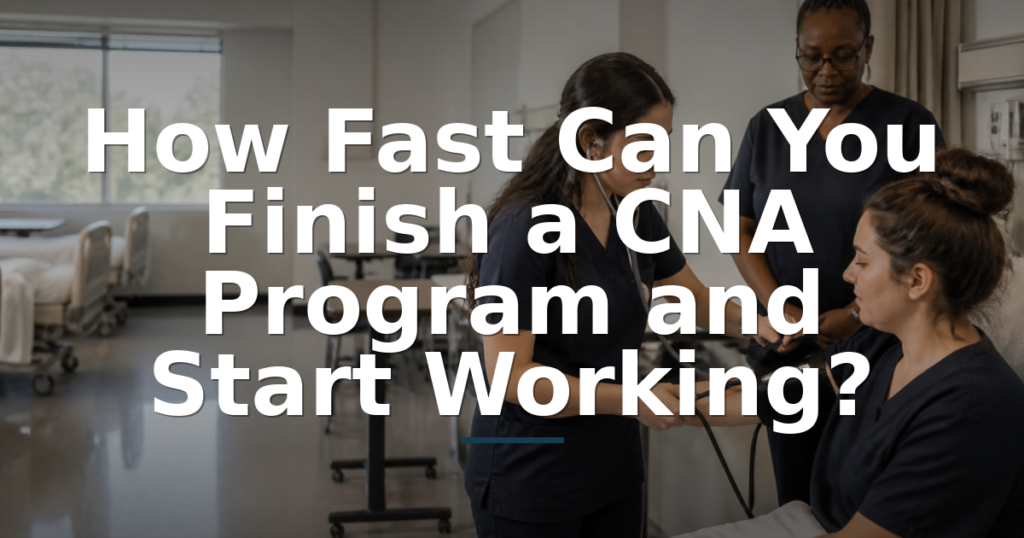
During training, you will first practice skills in a controlled simulation lab, a key part of CNA simulation training. These labs use mannequins, hospital beds, and standard equipment to build your confidence without risking patient safety. You might check vital signs on a peer, or perform a transfer technique with an instructor guiding you through each step. Simulations are low-pressure and emphasize repetition.
Clinical rotations shift you from the lab to a working facility, such as a nursing home or hospital. You'll interact with actual residents under the supervision of a licensed nurse or CNA instructor. The pace is faster, and you must adapt your techniques to real bodies, some frail, some uncooperative. This transition is where textbook knowledge becomes instinct.
Clinical shifts often mirror a CNA's work schedule, usually running four to eight hours in the morning or early afternoon. You arrive in uniform, with a watch for timing vital signs and a small notebook. The student-to-instructor ratio is typically low, around 8:1 or 10:1, ensuring close supervision.
Common tasks you may perform include: - Taking manual blood pressure, pulse, and respiration rates - Assisting residents with bathing, grooming, and oral care - Helping with bedpan or bedside commode use - Transferring residents from bed to wheelchair using gait belts - Performing range of motion exercises for hips, knees, or shoulders - Making occupied beds and changing linens
You will also observe infection control practices, like hand hygiene and proper glove use, while learning how to communicate gently with confused or anxious residents.
Throughout clinicals, your instructor watches for correct technique and safe body mechanics. After each skill attempt, you receive immediate feedback, often with a demonstration of what to adjust. This coaching is essential because the state exam will evaluate the same 20 to 25 hands-on skills. Many programs use a checklist: once you perform a skill correctly three times under observation, it gets “checked off.” You must demonstrate proficiency in every required skill, from denture care to measuring urinary output, before you can sit for the certification exam. Those check-offs serve as a confidence builder and a clear record of your readiness.
Before CNAs can provide direct patient care, they must demonstrate competency in a specific set of hands-on clinical tasks, often numbering 25 or more, depending on the state. The exact list varies by location, and accessing the official checklist for your state is a critical step in preparing for both training and the certification exam.
The most reliable source is your state’s nurse aide registry or the agency that oversees CNA certification. Visit the website of your state’s health department or board of nursing and search for “Nurse Aide Training Program Curriculum” or “CNA skills checklist.” Many states post downloadable PDFs that list every mandatory skill along with the critical safety steps evaluators watch for during testing.
Additional resources include:
A typical CNA skills checklist covers personal care, mobility assistance, vital sign measurement, and infection control. While lists differ, most states require proficiency in tasks such as:
Each skill entry usually describes the supplies needed, the steps in order, and the evaluator’s scoring criteria. You will be tested on a random subset of these skills during the clinical portion of your exam.
What separates passing from failing is often attention to safety. Checklists highlight “critical steps,” actions you must perform correctly without prompting. These may include locking wheelchair brakes before a transfer, maintaining infection control during catheter care, or ensuring privacy and dignity throughout a procedure. If you miss even one critical step, the evaluator may stop the skill and mark it as unsuccessful.
Because the process is so precise, it is essential to study the checklist that aligns with the exam you will take. Confirm with your training program whether they use the NNAAP skills list or a state-specific version, then practice until each step feels automatic.
Passing the nurse aide competency exam is the final hurdle before you earn a spot on your state’s nursing assistant registry. The exam is designed to confirm you can safely perform essential care tasks, and about a quarter of first-time candidates don’t pass on their first attempt, so organized preparation is critical.
The written portion typically contains 70 multiple-choice questions, though only 60 are scored. The remaining 10 are unscored pretest items used to develop future exams.1 The content covers three large domains: Physical Care Skills (activities of daily living, basic nursing techniques, restorative care), Psychosocial Care Skills (emotional, mental health, and cultural needs), and the Role of the Nurse Aide (communication, client rights, legal and ethical behavior, and teamwork).2
If reading is a barrier, many states offer an oral version. Instead of reading questions, a recorded voice reads each item aloud. The passing standard for the knowledge test is a scaled cut score, meaning the number of correct answers needed can vary slightly by exam form.3
The skills evaluation is hands-on and timed. You will be asked to perform five randomly selected skills.2 All five must receive a “satisfactory” rating for you to pass this part. A hand hygiene skill is almost always included, and you can fail the entire evaluation instantly if you neglect proper handwashing or glove use at key moments. At least one measurement skill, such as taking a manual blood pressure or recording intake and output, commonly appears as well.
Examiners watch closely for safety, infection control, and resident dignity. They aren’t looking for speed: they want to see deliberate, correct technique and communication with the pretend resident. You are allowed to self-correct a critical error mid-skill, but only if you catch it before the evaluator calls the skill complete.
Start with the official handbook published by your state’s testing vendor. The NCSBN provides a free NNAAP test plan that outlines every topic and skill, so download it and use it as a checklist.2 Practice tests are invaluable. They not only reinforce content but also build comfort with the phrasing of multiple-choice questions. Many state health departments post sample written exams online, giving you a realistic sense of what exam day feels like.
For the skills portion, practice each of the roughly 25 possible skills from your state’s list until you can perform them smoothly without cues. Work with a classmate or use a pillow as a mock resident. Narrate your actions aloud: saying “I am lowering the bed and locking the wheels” shows the evaluator you understand the reasoning behind the step.
Try to schedule your skills evaluation soon after training ends, while clinical routines are fresh. Rest well the night before, arrive early, and bring the required identification. Many states report first-time pass rates between 65% and 75%, so don’t be discouraged if you need a second attempt. Retesting is common, and each attempt gives you a clearer picture of what to expect.
Fully online certified nursing assistant (CNA) certification does not exist, and any program claiming otherwise should raise a red flag.1 What varies is how much of the theory portion moves online, while hands-on skills always require in-person time.
Most hybrid CNA programs let students complete anatomy, infection control, and communication coursework remotely, then require them to show up for lab and clinical hours in person. The exact split depends on the state and school. A New York hybrid track, for example, pairs 122.5 hours of online theory with 30 hours of in-person clinicals.5 Colorado's version runs remote lectures alongside 16 hours of lab work and another 16 hours of clinical practice. Nationally, hybrid formats commonly build in around 16 hours of required clinical time, though many programs schedule more.
Because a screen cannot confirm whether someone can safely reposition a resident or take a manual blood pressure, every legitimate program requires an in-person competency exam with a skills component.2 Students demonstrate tasks on a live person or manikin while an evaluator scores technique, and this proctored check happens regardless of how much theory was completed online. This structure protects patients and gives employers confidence that a certificate actually reflects hands-on ability.
States maintain oversight specifically because online delivery expanded. California's health department, for instance, keeps a public list of approved online nurse assistant training providers3, and other states run similar approval processes. Before enrolling anywhere, confirm the program appears on your state's approved list, ask how clinical hours are scheduled, and find out whether skills labs happen on your campus or a partner site. Also, look for programs that appear in rankings of the best CNA programs to ensure quality. Hybrid formats suit working adults and rural students who need scheduling flexibility4, and some summer CNA training programs offer a fast track to certification. The in-person clinical requirement is non-negotiable everywhere in the country.
After completing your CNA training and passing the competency exam, you are nearly ready to enter the workforce. The final hurdle is activating your status on your state's nurse aide registry. This official list is what employers use to confirm you are qualified to practice. While the exact process varies by state, the following steps give you a clear roadmap of what to expect.
Once you have passed both parts of the nurse aide competency exam, you will need to submit an application to your state's nurse aide registry. This is typically managed by the state's department of health or human services. The application will ask for personal information, your training program details, and proof of exam completion.
Almost every state requires a criminal background check as part of the process. You will likely need to be fingerprinted, either at a designated law enforcement agency or through an approved electronic service. Some states mandate this check before you begin clinical training; others only require it after exam passage. Be prepared to pay a fee for the background check and application, which can range from $25 to $100 depending on the state. Keep all receipts and copies of your submitted forms.
After your application has been processed and your background check clears, your name should appear on the state's online nurse aide registry. Most states maintain a searchable public database where you can look up your own listing. It is a good idea to verify that your name is spelled correctly and that your cna certification is shown as active. Employers will access this same database during the hiring process to confirm your eligibility. In some states, you may also receive a physical certificate or wallet card in the mail. If any information is incorrect, contact the registry office immediately to have it corrected.
CNA certification is not a one-time credential. To keep your status active on the registry, you must meet renewal requirements, typically every 24 months. The most common requirement is that you have worked as a paid CNA for a minimum number of hours within the renewal period. In many states, this is as little as 8 hours of CNA work under the supervision of a licensed nurse. If you do not meet this employment threshold, your certification may lapse, and you might need to retake the competency exam or complete a state-approved refresher course. Some states also mandate continuing education, such as in-service hours on topics like infection control or resident rights. Always check with your state's registry for the most current rules, as they can change.
By completing these steps, you protect your investment in training and keep the door open to a rewarding career as a nursing assistant.
Nursing assistant wages and job availability differ significantly from state to state. The table below presents the latest median annual wages and total employment figures from the U.S. Bureau of Labor Statistics (2024) for a selection of states. These numbers can help you compare earning potential and job concentration as you plan your training and career.
| State | Total Employment | Median Annual Wage |
|---|---|---|
| Oregon | 12,800 | $48,390 |
| Washington | 28,080 | $48,260 |
| New York | 85,310 | $47,390 |
| District of Columbia | 2,550 | $46,860 |
| California | 102,380 | $46,420 |
| New Hampshire | 7,190 | $46,050 |
| Alaska | 1,660 | $45,840 |
| Maine | 8,590 | $45,640 |
| Minnesota | 26,970 | $45,580 |
| Massachusetts | 38,280 | $45,410 |
| Nevada | 8,670 | $45,060 |
| Colorado | 20,880 | $44,950 |
| New Jersey | 31,310 | $44,910 |
| Hawaii | 4,620 | $44,830 |
| Illinois | 64,660 | $44,750 |
| Connecticut | 21,390 | $44,500 |
| North Dakota | 6,920 | $44,190 |
| Rhode Island | 8,450 | $44,160 |
| Vermont | 3,140 | $43,610 |
| Wisconsin | 27,480 | $43,250 |
| Arizona | 17,350 | $41,980 |
| Pennsylvania | 65,410 | $41,110 |
| Virgin Islands | 120 | $41,090 |
| Maryland | 24,230 | $40,000 |
| Montana | 4,800 | $39,300 |
How can you stay on top of your CNA coursework, clinical hours, and personal responsibilities without burning out?
Treat CNA training like a job. Map out your week to include dedicated blocks for reading, reviewing skills checklists, and preparing for the certification exam. Even 30 minutes of focused study daily beats a weekend cram session. Pair this with a shared calendar so family or roommates know when you are unavailable. A steady rhythm reduces anxiety and helps you retain material long-term.
Muscle memory matters. In your lab or at home, physically walk through each step of tasks like manual blood pressure, denture care, or assisted range-of-motion exercises. Speak the steps aloud as you go , this reinforces proper sequencing and communication habits you will need during the skills demonstration portion of the exam, a common topic in cna training stories. If you fumble a skill, repeat it until it feels automatic, not just correct.
Form a small study group or partner with one classmate. Run through the CNA skills checklist together, quiz each other on infection control principles, and practice mock exam scenarios. Explaining a concept to someone else is one of the fastest ways to lock it in. A partner can also give honest feedback on your technique and bedside manner before an instructor evaluates you.
During your time at a facility, watch how experienced CNAs prioritize tasks, communicate with residents, and handle unexpected moments , these are essential lessons for how to be a good CNA. Ask your preceptor thoughtful questions during quiet periods: “What would you do if a resident refuses care?” or “How do you protect your back during a two-person transfer?” Downtime is not wasted time if you stay curious and observant.
Below are answers to common questions about CNA training, from state hour requirements to exam day expectations. Whether you are considering online classes or preparing for clinicals, this quick guide covers the essentials to help you navigate your nursing assistant journey.
Training hours vary by state, typically ranging from 75 to 180 total hours. For example, Florida requires 120 hours1, while federal guidelines mandate a minimum of 75 hours for state-approved programs. Always verify with your state's nursing board for exact requirements, as some states allow challenge exams1 or have unique pathways.
The skills portion of the CNA competency exam tests proficiency in essential nursing assistant tasks. Candidates are randomly assigned a subset of skills, such as taking manual blood pressure, denture care, bedpan assistance, and range-of-motion exercises. You must demonstrate competency in infection control, safety, and proper technique.
Many programs offer hybrid options, combining online coursework with in-person skills labs and clinical rotations. For instance, rural students in some areas complete coursework online and attend periodic in-person labs. Fully online CNA programs are not possible because hands-on clinical experience is mandatory for certification.
The written exam covers the classroom curriculum, including anatomy, infection control, communication, and resident rights. Most students pass on their first attempt with thorough study and practice tests. It's typically multiple-choice and designed to ensure you have the knowledge to work safely. Preparation courses and review materials are widely available.
During clinical rotations, students shadow a working CNA at a facility like a nursing home. A typical day involves assisting residents with daily activities such as bathing, dressing, eating, and mobility. You will practice taking vital signs, documenting care, and responding to call lights under supervision, gaining real-world confidence.
After completing a state-approved training program, you must pass the state competency exam: a written (or oral) test and a skills demonstration. Once you pass, your name is added to the state's nurse aide registry. Some states require a background check1 and continuing education to maintain active status.