
Key Points
- Georgia requires just 85 hours of CNA training to certify.
- New CNAs in Thomasville earn about $15.25 per hour starting.
- CNA training costs range from free to $2,850 in Thomasville.
Explore CNA classes in Thomasville: affordable tuition, flexible schedules, and certification guidance.
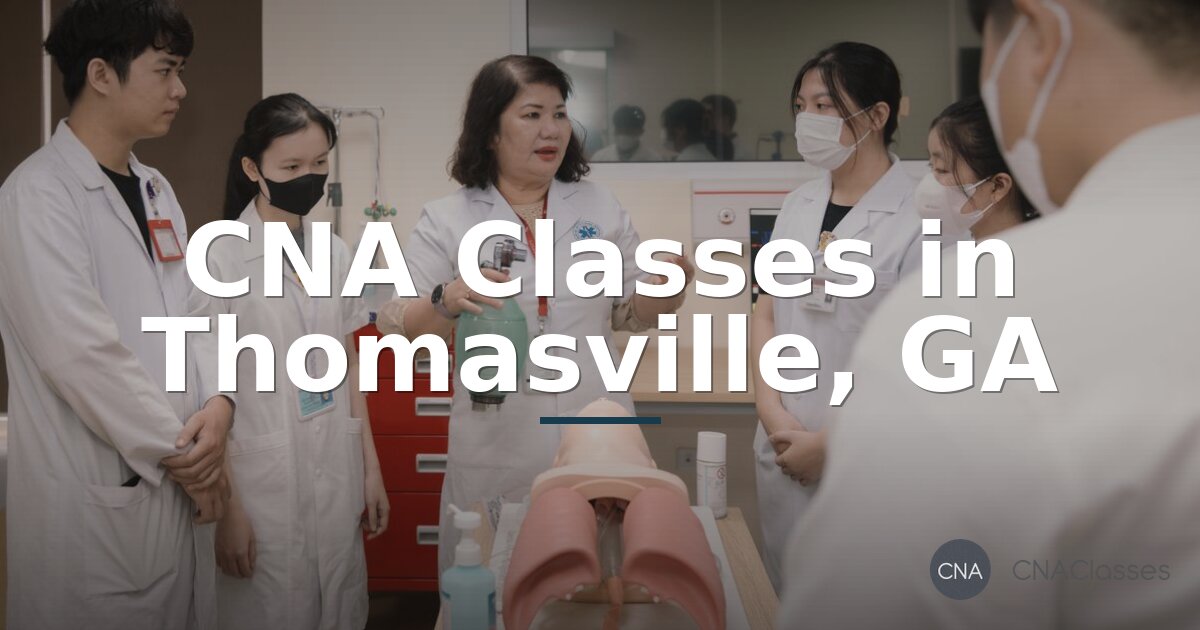
In-person classes at a local technical college, hybrid coursework completed partly online, or employer-sponsored training at a Thomasville nursing facility: each path through CNA classes in Georgia leads to a credential in as few as four to six weeks. With starting pay near $15.25 per hour and steady demand from area employers like Archbold Memorial Hospital and several long-term care centers, the entry point is accessible and the job market is favorable.
The real question for most prospective students is cost and scheduling. Tuition ranges from $0 for sponsored programs to roughly $2,850 at technical colleges, and Georgia's 85-hour minimum keeps the time commitment manageable.
Certified Nursing Assistants are the frontline caregivers in Thomasville's hospitals, nursing homes, assisted living facilities, and home health agencies. They help patients with daily activities like bathing, dressing, eating, and mobility, while monitoring vital signs and reporting changes to licensed nurses. In Thomasville, CNAs play an essential role in maintaining quality care across the city's healthcare landscape.
Thomаsville's healthcare sector centers around several key employers actively hiring CNAs throughout 2026. Archbold Medical Center, the region's largest hospital, pays CNAs an average of $22.40 per hour,1 well above the local median. Camellia Gardens and other residential care facilities offer steady employment, with Pinewood Nursing Center offering up to $18 per hour for experienced CNAs.2 Home health agencies like Home Helpers (averaging $14.97 per hour3) and SYNERGY HomeCare ($16 to $19 per hour2) provide flexible scheduling options for CNAs who prefer community-based care. Nearby facilities in Tallahassee, where cna classes in tallahassee fl are available, and Cairo also draw Thomasville-area CNAs, with Select Specialty Hospital in Tallahassee paying around $21 per hour.2
The median hourly wage for CNAs in Thomasville stands at $15.67 as of 2026,4 with most positions falling between $15 and $17 per hour. Entry-level CNAs typically start around $12.31 per hour, while experienced nursing assistants can earn up to $19.95.4 Annual earnings average $32,600, and many CNAs add $3,750 per year through overtime shifts.4 Georgia's statewide median of $16.94 per hour5 means Thomasville salaries run slightly below the state average, though lower living costs in the region help offset that gap.
Georgia law defines CNAs' responsibilities clearly. Under nurse supervision, CNAs assist with activities of daily living, take and record vital signs, observe patients for changes in condition, and document care provided. They cannot administer medications, perform sterile procedures, or interpret clinical data. Employers in Thomasville typically expect CNAs to hold current Georgia certification (earned through cna programs in georgia), complete annual continuing education, and demonstrate strong communication skills alongside clinical competence.
No fully online CNA program exists in Georgia, but a growing number of hybrid options let Thomasville students complete coursework online while meeting clinical requirements in person. State regulations mandate a minimum number of hands-on hours, so every accredited program blends digital theory with on-site skills practice.
Hybrid programs divide learning into two parts: self-paced online modules covering anatomy, infection control, and patient rights, and in-person clinical rotations at a local healthcare facility. After finishing the online portion, you schedule your clinicals at a partner site near Thomasville, often the same nursing homes or hospitals that host traditional students.
Several schools use a digital-first approach to reach Thomasville students: - AABACUS CNA offers a compressed 4-week program with virtual instruction and helps coordinate clinical placements in southern Georgia. The fast pace works well for disciplined learners who can commit to full-time study. - Atlanta Career Institute runs a hybrid CNA course priced around $1,150, with online lectures and clinicals arranged in various Georgia cities, including Thomasville upon request. - Southern Regional Technical College in Thomasville itself delivers a mainly in-person program ($3,002), but some lecture components may shift to online formats periodically, check with the admissions office for current delivery mode.
Tuition for hybrid options typically ranges from $1,000 to $2,000, compared to $1,300, $3,000 for traditional in-person programs. Archbold Medical Center’s free, 9-week program is 100% in-person and employer-sponsored. Hybrid lengths vary: AABACUS finishes in 4 weeks, while Atlanta Career Institute’s schedule spans 5, 8 weeks depending on clinical availability. All include the required 85 hours of total training (40 theory and 45 clinical).
For Thomasville residents who need to balance family or work, a hybrid CNA program offers a practical path into healthcare without relocating.
Georgia requires just 85 hours of CNA training (including 24 clinical hours), which is at the federal minimum. Compare that to Florida, which requires 120 hours, or Alabama at 75 hours. Georgia's shorter timeline means you can be certified and working in as little as four to six weeks.
Georgia requires a minimum of 85 hours of combined classroom and clinical training before candidates can sit for the state competency exam, and programs serving Thomasville students typically structure their curricula to meet or exceed this threshold. Understanding how local programs organize their schedules, clinical partnerships, and outcome tracking will help you choose the right fit for your timeline and career goals.
CNA programs in the Thomasville area generally offer multiple enrollment windows throughout the year, though specific start dates and application deadlines vary by institution. For the most accurate scheduling information, visit the official websites of training providers such as Southern Regional Technical College, local career centers, and healthcare facilities that sponsor CNA training. Look for pages labeled "CNA," "Nursing Assistant," or "Health Sciences" within their program directories.
Many programs offer flexible scheduling options to accommodate working adults and students with family responsibilities. You may find day sessions that run during weekday mornings or afternoons, evening classes designed for those who work traditional hours, and in some cases weekend or accelerated formats that compress training into a shorter timeframe. Since schedules can change between enrollment periods, contact the admissions office or nursing department directly to make sure you have current information before planning your semester.
Clinical experience forms the hands-on foundation of CNA training, allowing students to practice skills like patient transfers, vital sign measurement, and personal care assistance under supervision. Programs typically partner with local nursing homes, assisted living facilities, or hospital units to provide these supervised practice hours.
Details about specific clinical site partnerships are not always published online. If knowing where you will complete your clinical rotations matters to you, perhaps because of transportation concerns or interest in a particular care setting, reach out to the program coordinator before enrolling. They can confirm which facilities serve as training sites and whether students have input on placement.
State competency exam pass rates offer one way to measure how well a program prepares its graduates. The Georgia Medical Care Foundation oversees CNA testing in the state, and the National Nurse Aide Assessment Program provides standardized examination data. Some programs publish their recent pass rates on their websites or in promotional materials, while others share this information upon request.
When evaluating a program, ask admissions staff directly about first-time pass rates for recent graduating cohorts. Strong programs often maintain pass rates well above the state average, reflecting effective instruction and adequate clinical preparation. If a school cannot or will not share outcome data, consider that a factor in your decision.
Many CNA programs offer some form of job placement support, ranging from resume workshops and interview coaching to direct referrals with partnering healthcare employers. In a region like Thomasville, where healthcare facilities represent significant local employers, training programs often maintain relationships that can ease the transition from student to working CNA.
Ask prospective programs whether they provide formal job placement services, maintain employer partnerships, or track employment rates for their graduates. For broader context on career outlook and salary trends, the U.S. Bureau of Labor Statistics publishes nursing assistant data, and professional associations like the National Association of Health Care Assistants offer additional guidance on career development and advancement opportunities.
Hands-on clinicals at Archbold gave me the confidence to provide compassionate care. The feeling of making a real difference in someone's life is why I became a CNA.
The U.S. Bureau of Labor Statistics reports the following 2024 wage and employment figures for nursing assistants in Georgia metro areas. While Thomasville is not tracked as a separate metro area, nearby communities offer a useful salary benchmark for new CNAs entering the field.
| Location | Employment | Median Annual Wage | 25th Percentile | 75th Percentile |
|---|---|---|---|---|
| Valdosta, GA | 530 | $33,140 | $30,260 | $36,150 |
| Albany, GA | 840 | $33,110 | $29,520 | $37,330 |
| Atlanta-Sandy Springs-Roswell, GA | 22,530 | $38,250 | $35,480 | $44,060 |
Georgia updated its nurse aide training standards recently to align with federal competency benchmarks, so the path to certification is clearly defined for anyone starting out in Thomasville today.
The first step is enrolling in a CNA training program approved by the Georgia Medical Care Foundation, which administers the state's nurse aide registry. Georgia requires at least 85 hours of instruction, including classroom education and supervised clinical practice in a healthcare setting. Most Thomasville-area programs exceed this minimum, devoting extra time to hands-on skills practice and exam preparation.
During your program, you will cover topics such as infection control, patient rights, vital signs measurement, personal care, nutrition, and communication with healthcare teams. Clinical rotations typically take place in local nursing facilities or hospitals so you gain real-world experience before sitting for the certification exam.
Once you finish training, you must pass the National Nurse Aide Assessment Program (NNAAP) exam. The evaluation has two parts:
You need to pass both components to qualify for the registry. If you fail one part, Georgia allows retakes, though there is a limit on the number of attempts within a certain timeframe. Local Thomasville programs typically build structured NNAAP review sessions into the final weeks of coursework, including timed practice skills tests and written question drills, so students feel confident on exam day.
After passing both sections of the NNAAP, your name is placed on the Georgia Nurse Aide Registry. This listing is what employers verify before hiring, so keeping your registry status current is essential. Georgia requires CNAs to renew their certification every two years. To renew, you must demonstrate that you have worked at least eight hours of paid nursing-related services during that period.
Federal regulations mandate at least 12 hours of annual in-service training for CNAs in Medicare- or Medicaid-certified facilities, covering topics like patient safety, dementia care, and abuse prevention. Many Thomasville employers provide this on site, and you can also find continuing education through community programs or online platforms. Staying current not only keeps you eligible to work but also builds the clinical knowledge that supports advancement into roles like medication aide or licensed practical nurse.
CNA training in Thomasville costs between $0 and approximately $2,850 depending on whether you qualify for free employer-sponsored programs or enroll in traditional technical college courses. Understanding the full cost breakdown and available financial aid helps you choose the right path without unnecessary debt.
Southern Regional Technical College's Nurse Aide Technical Certificate of Credit program charged $2,849.48 in total for 20241, broken down as follows:
For 2026, the estimated in-state tuition and fees across the college stand at $2,896 for the full certificate. The college charges $107 per credit hour plus several fixed fees including a $110 technology fee, $63 registration fee, $60 instructional fee, $60 facilities fee, $45 campus security fee, and $35 activity fee per semester. Out-of-state students face significantly higher costs, ranging from $5,575 to $5,629 for the full program period.
Beyond tuition, budget for uniforms (scrubs, comfortable shoes), a stethoscope, and the Georgia Nurse Aide Registry examination fee, which typically runs around $120.
Archbold Health System partners with Southern Regional Technical College to offer fully funded CNA training through WorkSource Southwest Georgia. This scholarship covers tuition, fees, books, scrubs, and testing fees up to $2,700, effectively making training free for eligible students. Participants typically commit to working at Archbold facilities after certification, which provides immediate job placement alongside cost savings.
Many nursing homes and long-term care facilities in Thomasville also sponsor CNA training for new hires, covering all costs in exchange for a work commitment of six months to one year.
If you do not qualify for employer sponsorship, several financial aid options can help lower your out-of-pocket costs:
Many students combine multiple funding sources. A typical scenario might use WIOA to cover tuition and a local scholarship to pay for scrubs and the state exam, bringing total personal expense to zero or near zero.
Below are the top CNA programs serving Thomasville students, ranked by affordability and program fit. These programs, while located across Georgia, provide accessible training pathways for Thomasville residents willing to commute or relocate. All prepare graduates for the Georgia CNA certification exam.
Athens, GA · $3,000 – $6,000/yr
Best for: Adult learners needing 12-week program
Athens Technical College offers a top-rated Certified Nurse Aide program with multiple enrollment cycles each year. The 12-week campus-based program combines 135 classroom hours with 45 clinical hours, preparing students thoroughly for the state exam. Applicants must be at least 18, hold a high school diploma or GED, and pass background and drug tests. Funding through WIOA or NEGRC may cover fees.
Americus, GA · $1,000/yr
Best for: Low-cost training for Georgia residents
South Georgia Technical College provides a Nurse Aide Technical Certificate of Credit focusing on hospital and nursing home care. The campus-based program covers medical terminology, nutrition, and patient care, with clinical experiences. Graduates are eligible to take the National Nurse Aide Assessment Program for state certification. Financial aid is available to support diverse student needs.
Rome, GA · $5,000 – $10,000/yr
Best for: No high school diploma required
Georgia Northwestern Technical College's CNA program is open to all eligible applicants, with no high school diploma required. The accelerated certificate combines classroom, lab, and clinical rotations, preparing students for nursing assistant roles in various settings. Five annual cohorts provide frequent start dates. Financial aid and dedicated advisors support enrollment.
Valdosta, GA · $0 – $5,000/yr
Wiregrass Georgia Technical College's Nurse Aide program is a one-term technical certificate with no high school diploma required. It qualifies for the HOPE Career Grant, reducing costs significantly. Students complete classroom and clinical training, then sit for the NNAAP exam. CPR, physical, immunizations, background, and drug screen are required prior to clinicals.
Warner Robins, GA · $7,000/yr
Central Georgia Technical College's Patient Care Assisting program is a technical certificate open to ages 16 and up, including dual-enrolled high school students. The fast-track pathway provides foundational healthcare skills for immediate employment. Recognized as military-friendly, the program supports diverse learners.
Savannah, GA · $6,000/yr (net price)
Savannah Technical College offers a flexible Nurse Aide program with both two-semester and accelerated 7.5-week tracks. The hands-on curriculum includes clinical rotations and prepares students for the NNAAP exam and Georgia registry. It serves as a stepping stone to advanced roles like Patient Care Technician.
Waycross, GA · $0 – $5,000/yr
Coastal Pines Technical College's Nurse Aide Technical Certificate is a 13-credit campus program open to students 16 and older without a high school diploma. It combines classroom and clinical training, covering medical terminology and nurse aide fundamentals. Graduates are eligible for the NNAAP exam and Georgia state registry.
Vidalia, GA · $10,000 – $15,000/yr
Southeastern Technical College provides a state-approved Nurse Aide Accelerated program for quick entry into healthcare. The intensive campus-based training includes clinical experience in diverse settings and prepares students for the Georgia Nurse Aide Registry exam. Entry-level wages range from $7.25 to $16.50 per hour.
Waco, GA · $2,000/yr (net price)
West Georgia Technical College's Nurse Aide program offers hands-on training across multiple campuses, with an accelerated certificate option. Under licensed nurse supervision, students learn essential patient care skills for hospitals, nursing homes, and assisted living. Geriatric care is a focus.
Statesboro, GA · $7,000/yr
Ogeechee Technical College's Nurse Aide Certificate is a 13-credit hour, one-semester program with five clinical sites. Tuition is $100 per credit, totaling $1,300, plus fees. Applicants must be 16+ and meet Accuplacer scores. CPR, background check, and drug screen are required.
Here are answers to the most common questions about becoming a certified nursing assistant in Thomasville, Georgia. From training costs and program length to certification requirements and job opportunities, this FAQ covers what you need to know to get started in 2026.