Key Points
- CNA training in Tyler costs $800 to $1,500 and lasts 4 to 12 weeks.
- Tyler-area CNAs earn a mean salary of $34,430 annually.
- Hybrid online classes and Tyler Junior College offer flexible training paths.
Compare state-approved CNA programs in Tyler, TX: costs, requirements, and how to enroll.
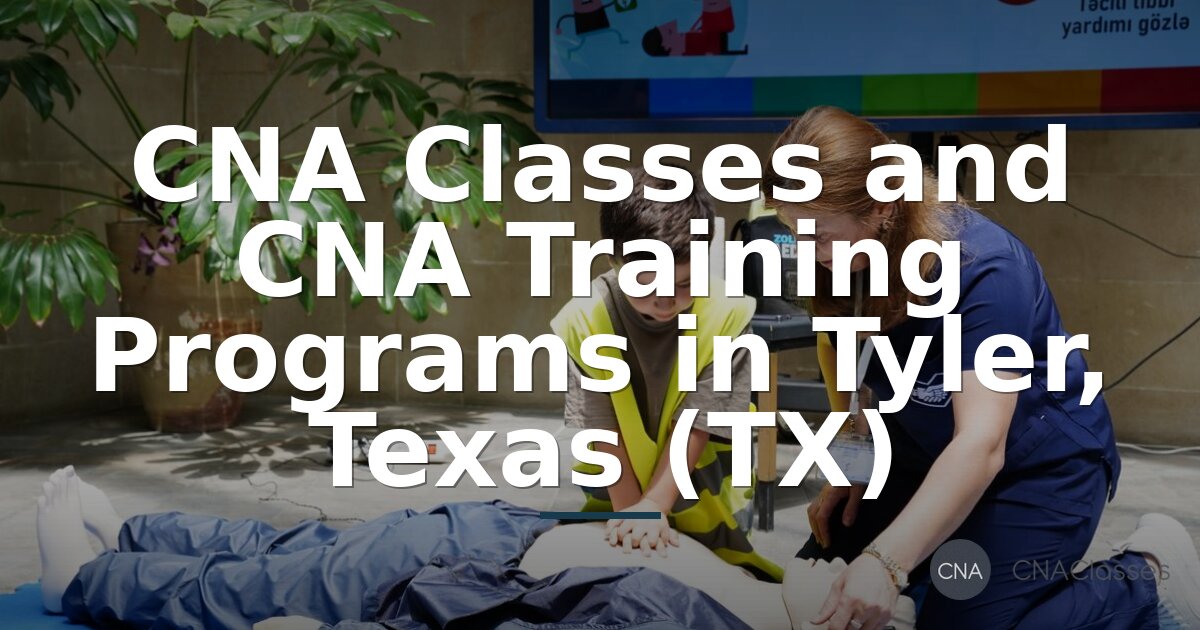
The difference between an $800 CNA program lasting four weeks and a two-year nursing degree isn't just tuition, it's how quickly you can start earning. Tyler's expanding healthcare corridor, anchored by UT Health Tyler and Christus Trinity Mother Frances, generates steady demand for new certified nursing assistants. This guide compares on-campus, hybrid, and online courses, typical cost ranges, and local wages; skip ahead to the top-ranked CNA programs for Tyler students.
Tyler sits at the center of a thriving regional healthcare network that employs thousands of medical professionals across more than a dozen hospitals, specialty clinics, and long-term care facilities scattered throughout East Texas. This concentration of providers creates steady demand for certified nursing assistants who deliver bedside care, assist with daily activities, and serve as the front line of patient observation in every clinical setting.
Three healthcare systems anchor Tyler's medical economy. UT Health Tyler operates a Level I trauma center and remains the largest employer in Smith County, with more than 4,000 staff members. Christus Trinity Mother Frances Health System runs two acute-care hospitals in Tyler plus a regional network of outpatient centers, rehabilitation facilities, and specialty clinics. Baylor Scott & White Texas Spine & Joint Hospital focuses on orthopedic and spine care, drawing patients from across the state and creating a niche for CNAs skilled in post-surgical mobility and pain management.
Two trends drive CNA hiring in Tyler. First, Smith County's population aged 65 and older has grown faster than the state average over the past five years, expanding the need for home health aides, skilled-nursing staff, and assisted-living workers. Second, outpatient surgery centers, dialysis clinics, and urgent-care providers continue opening new locations across Tyler, each requiring certified assistants to prepare patients, monitor vital signs, and coordinate transitions between providers.
Texas law defines a narrow but essential scope of practice for nursing assistants. CNAs may take vital signs, assist with bathing and dressing, help patients move from bed to wheelchair, document intake and output, and report changes in condition to licensed nurses. They cannot administer medication, perform wound care beyond basic cleaning, or make independent clinical decisions. That focused role keeps CNA classes in Texas short while ensuring hospitals and clinics can hire entry-level staff quickly to meet fluctuating patient volumes.
The shift toward flexible learning formats has made CNA training more accessible than ever, with many programs now blending online coursework and in-person clinical hours to accommodate working adults and busy schedules. If you live in Tyler, Texas, and prefer not to sit in a traditional classroom for every lecture, hybrid options are worth exploring, though you will still need hands-on clinical experience to meet state certification requirements.
A hybrid CNA program typically delivers the classroom or theory portion online and schedules the clinical skills lab and patient-care hours at an approved healthcare facility. Texas requires a minimum number of supervised clinical hours before you can sit for the state competency exam, so no program is entirely online. When evaluating a hybrid option, confirm that the program arranges clinical placements at facilities in or near Tyler rather than requiring you to travel long distances.
Several resources can help you identify state-approved programs with online or hybrid components:
Not all online coursework is created equal. Before enrolling, ask a few targeted questions:
Taking a few minutes to verify these details can save you time and money. Programs that handle clinical placement on your behalf are especially valuable if you are new to the healthcare field and do not yet have connections at local nursing homes, hospitals, or rehabilitation centers in the Tyler area.
If you are ready to compare options side by side, cnaclasses.org can help you match with approved programs that serve Tyler students. Gathering information from multiple sources, including state agencies, college websites, and professional organizations, gives you the clearest picture of which format fits your schedule and budget, whether you're in Tyler or exploring CNA classes Houston TX.
Understanding CNA training costs helps you budget realistically and explore funding options to reduce your out-of-pocket expenses. CNA programs remain among the most affordable healthcare credentials, and Tyler-area students have several ways to lower costs further.
Tuition for CNA programs in Tyler typically falls between $600 and $1,000. Your total costs will be higher once you add textbooks, uniforms, background checks, and the state exam fee.
Here are current tuition rates at several area programs:
These figures reflect tuition and mandatory fees only. You should also budget for textbooks, scrubs, a background check, and the Texas state competency exam. Ask each program what is included in their tuition price so you can compare total costs accurately.
Many CNA programs offer payment plans that let you spread costs over several weeks or months. And if you are willing to commit to an employer after certification, employer-sponsored training can cover your costs completely. Several nursing homes, assisted living facilities, and hospitals in the Tyler area provide free CNA classes in exchange for a work commitment.1 This arrangement gives you paid training and a guaranteed job, benefiting both you and the employer. If you are already working in healthcare or open to committing to a specific facility, ask local employers about their sponsorship programs.
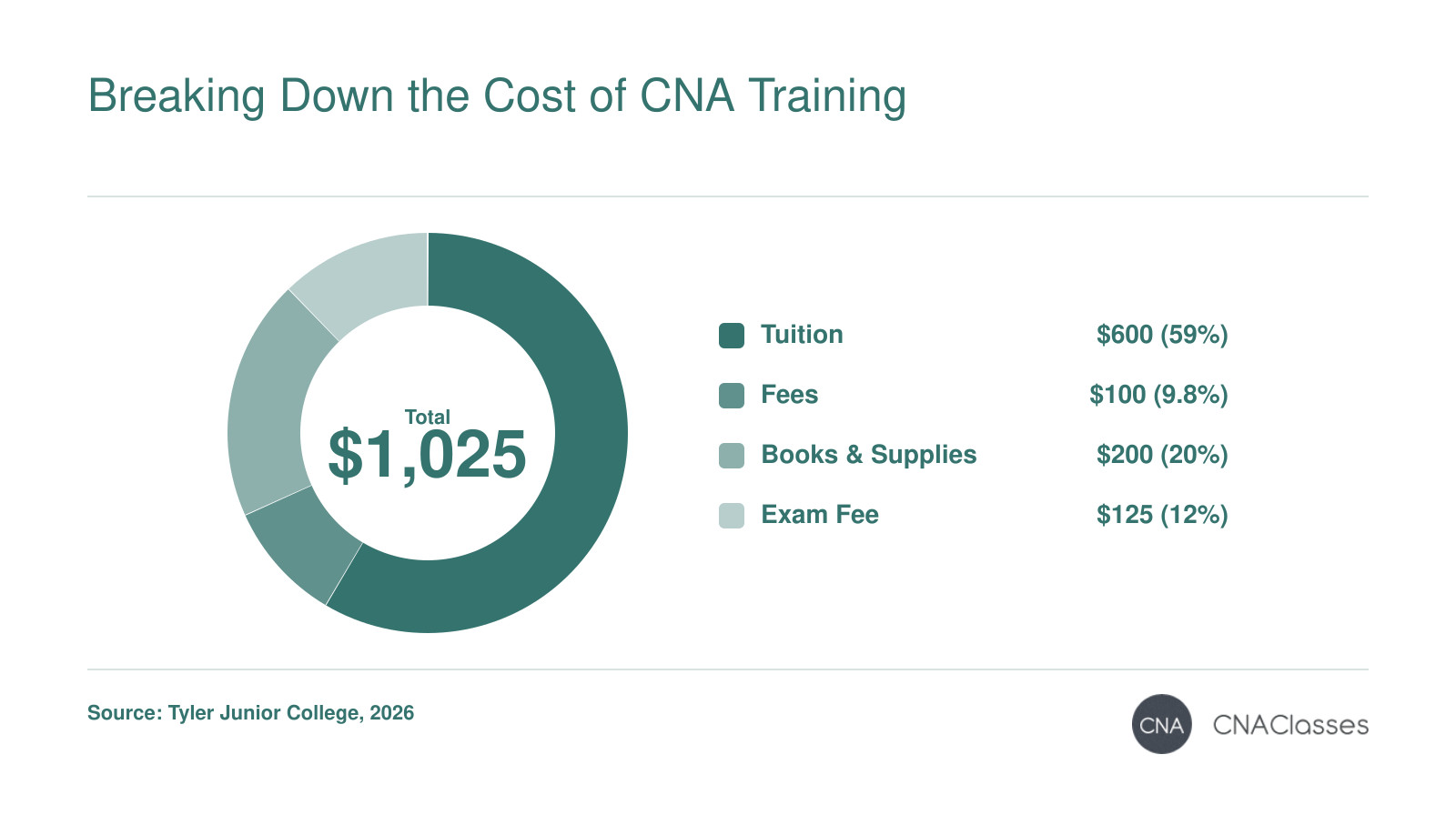
CNA training in Tyler is affordable compared to other healthcare programs. The total cost typically ranges from $800 to $1,500, depending on the institution and what's included. Here's a breakdown of a typical program's costs.
Nursing assistants in the Tyler metro area earn a mean annual wage of $34,430, with a median of $34,290, according to the latest BLS data. While Tyler wages are slightly below those in larger Texas metros like Dallas and Houston, the region's lower cost of living enhances the value of these earnings. Job prospects are strong: Texas projects a 19.7% growth rate for nursing assistants through 2026, translating to over 12,700 annual openings statewide.
| Location | Total Employment | Mean Annual Wage | Median Annual Wage |
|---|---|---|---|
| Tyler, TX | 1480 | $34,430 | $34,290 |
| Dallas-Fort Worth-Arlington, TX | 23280 | $39,100 | $37,260 |
| Houston-Pasadena-The Woodlands, TX | 19510 | $39,040 | $36,940 |
| San Antonio-New Braunfels, TX | 6910 | $36,410 | $35,990 |
| Austin-Round Rock-San Marcos, TX | 5920 | $38,850 | $37,460 |
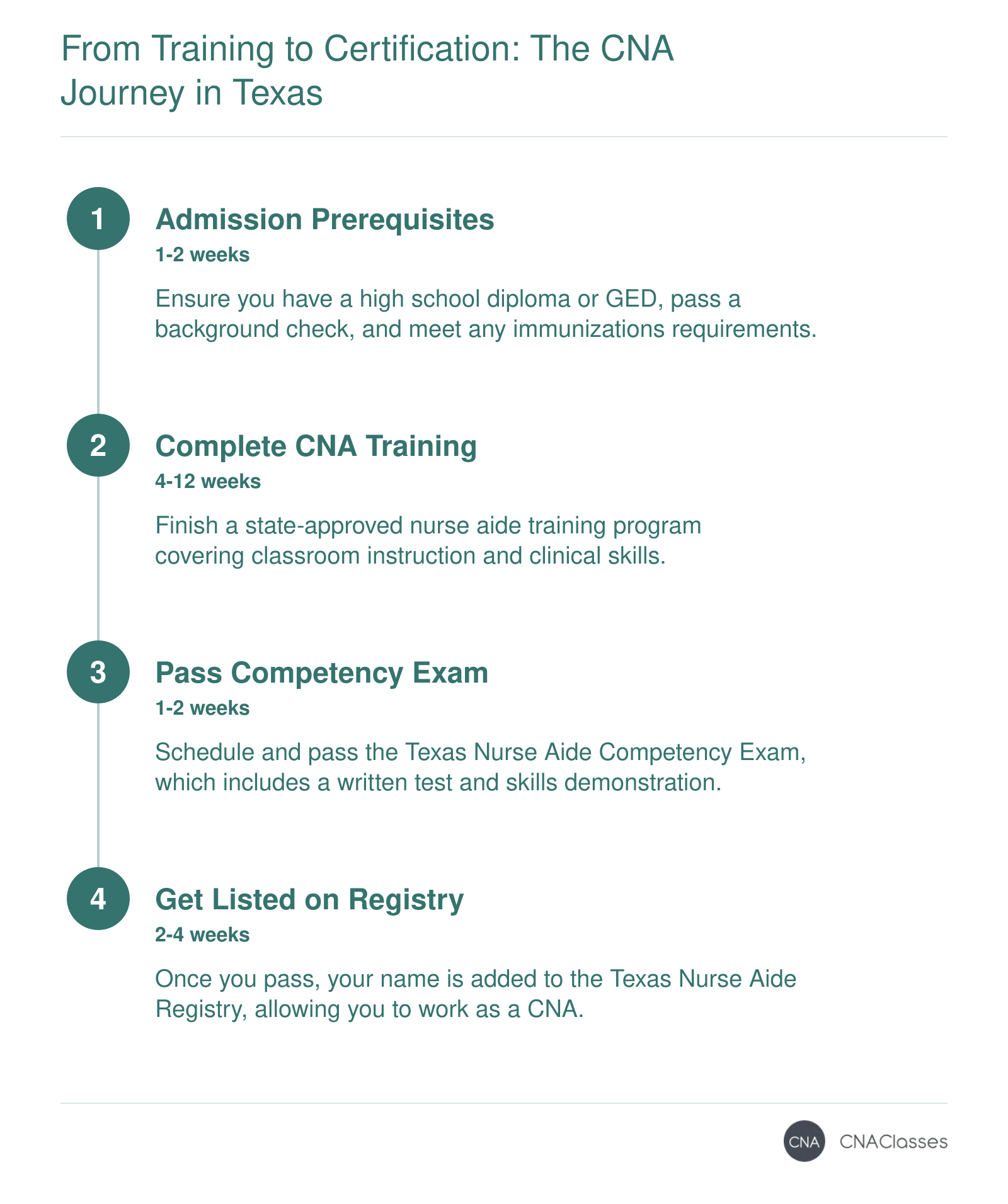
Follow this step-by-step checklist to navigate CNA program admission and certification in Tyler.
What will you actually do during your CNA clinical rotations in Tyler? After completing your classroom and lab work2, clinicals are where you transition from theory to practice. In Tyler, you will train in real healthcare environments under the supervision of licensed nurses, building the confidence and competence needed to pass the state exam and start your career.
CNA programs in Tyler partner with a variety of local facilities to give you broad exposure. You can expect to rotate through: - Skilled nursing facilities and nursing homes, where many CNAs begin their careers. - Hospitals, such as UT Health Tyler, offering experience with acute care patients. - Long-term care and rehabilitation centers, where you will assist residents with chronic conditions. Your program will assign your specific sites, and you must remain flexible because scheduling depends on facility availability1.
Texas does not mandate a single number of clinical hours for all programs, but most require between 16 and 100 hours of hands-on practice. For example, Tyler Junior College’s Certified Nurse Aide program includes 100 clinical hours1, providing extended time to refine your skills. Check with your chosen school for exact requirements. You must finish all classroom and laboratory instruction and pass a background check before starting clinicals3, and you need to complete both portions to be eligible for the state nurse aide exam2.
Durante clinicals, you will actively perform the duties of a CNA under supervision. Common tasks include: - Taking and recording vital signs like blood pressure, temperature, and pulse. - Assisting with activities of daily living (ADLs), such as bathing, dressing, toileting, and mobility. - Using equipment correctly, including gait belts, mechanical lifts, and bedpans. - Communicating with patients and reporting changes to the nursing team. You will also learn to manage infection control and safety protocols, all while building speed and accuracy.
Clinical rotations do more than fulfill a requirement. They prepare you for the real job. You will gain the muscle memory and bedside manner that can only be learned by working with actual patients. Additionally, clinicals are a prime networking opportunity. Impressing your supervising nurses can lead to job references, and many students receive job offers from their clinical sites. By the end of your clinicals, you will feel ready to ace the Texas Nurse Aide Registry Exam1 and walk into an interview with practical experience on your resume.
The Tyler area is home to a variety of CNA training providers, each with unique strengths. Our ranking below highlights a standout program based on key factors like cost, schedule flexibility, and clinical training quality.
Kilgore, TX · $2,000 – $5,000/yr
Best for: Affordable fast-track training in East Texas
Kilgore College's Certified Nurse Aide program is a fast-track, 100-hour training that prepares students for entry-level healthcare roles in just 3 weeks in-person or 8 weeks in a hybrid format. With a one-time $600 cost, it is one of the most affordable options near Tyler. The curriculum covers resident care, safety, communication, and reporting, and includes a clinical component that readies graduates for the Texas Nurse Aide Registry exam.
Getting clear answers is a smart first step toward your CNA career. Below we cover the most common questions about program length, cost, scheduling, and what comes after certification in Tyler, Texas.
Most CNA programs in Tyler last between 3 and 8 weeks, depending on the schedule and format. Accelerated options like Trinity Healthcare Services' hybrid course can be completed in just 1 week1, while Kilgore College's program takes 3 weeks2. The state requires a minimum of 100 training hours, which programs meet through a mix of classroom and clinical instruction.
The fastest option is the hybrid CNA course offered by Trinity Healthcare Services in Tyler, which can be completed in 1 week.1 It combines online coursework with in-person skills labs and clinicals. This accelerated format requires full-time commitment during that week. Traditional in-person programs typically take 3 to 4 weeks.
Yes, several providers in Tyler offer evening and weekend schedules to accommodate working adults or students with daytime commitments. Programs at schools like Trinity Healthcare Services and others in the area may have part-time or weekend-only tracks. It is best to contact the program directly to confirm current evening or weekend availability.
CNA program costs in Tyler generally range from $600 to $1,500. For example, the Kilgore College program costs about $6002, while Trinity Healthcare Services' hybrid course costs $7501 and its traditional 4-week course costs $1,1001. Some programs may include textbooks, scrubs, and exam fees in the total price, so always ask for a detailed breakdown.
Most CNA training programs in Tyler require a high school diploma or GED, as this is a common prerequisite for state certification exam eligibility. Some programs may accept students who are at least 17 years old and can pass a basic skills assessment. You should verify entry requirements with your chosen program before enrolling.
CNAs in Tyler find employment at major hospitals such as UT Health Tyler and Christus Trinity Mother Frances, along with nursing homes, assisted living facilities, rehabilitation centers, and home health agencies. The Tyler area's growing senior population fuels steady demand for CNAs, making it an excellent market to launch a healthcare career.